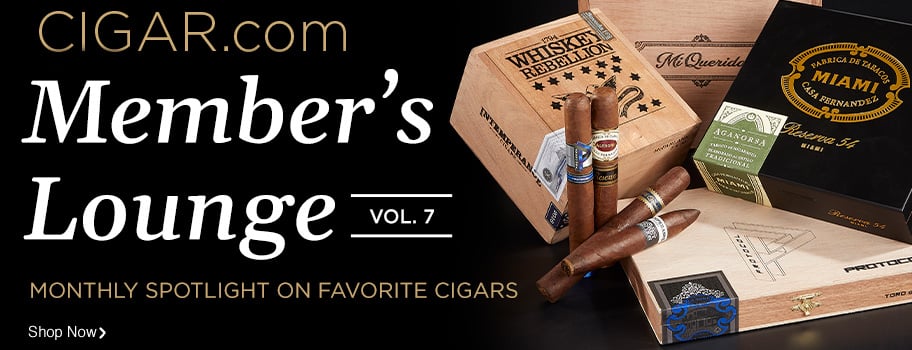
Relatively new to the industry as brand owners, former NYPD officers
Juan Cancel and Bill Ives are no strangers to cigar-smoking – or me for that
matter. We often crossed paths for years at cigar lounges across the five
boroughs, as well as at specialty events meant to benefit the “boys in blue,” so
on a personal note, I’m thrilled for their new career path after their
retirement from the force. Another frequent presence at these special events was
Erik Espinosa, and so a cordial friendship built on a mutual love of the leaf
has blossomed into a full-fledged business
relationship.
If you’re active on social media, you may feel as if you
know Juan and Bill even if you’ve never met them: they’re always on Facebook and
Instagram clowning around, enjoying premiums, and enjoying drinks with friends.
A couple of years after Espinosa opened his La Zona factory in Estelí, the duo
took a trip down to Nicaragua for fun, and came away with their idea of creating
a boutique brand themed around their background in law enforcement. Protocol
began as a limited release of just 5,000 cigars in May 2015 to retailers local
to New York and New Jersey; going into IPCPR the following year, however, a
slightly larger batch was rolled with the goal of securing 20 new accounts
in-mind. Juan and Bill exceeded their own expectations, as they say, “the rest
is history.”
Often referred to as “Protocol Blue” to distinguish from
other newer blends, this was the original cigar to officially hit the market
under the young label. Rolled under the supervision of Erik Espinosa himself,
the long-filler blend is comprised of a quadruple ligero mixture from Jalapa and
Estelí. (While Estelí does produce strong leaves, Jalapa tends to even out the
equation by imparting a lot of flavor in a balanced format.) A Nicaraguan Habano
binder rests below an Ecuadorian Habano Oscuro wrapper that’s a little on the
rustic side, but such an appearance imparts some character to the otherwise
semi-understated and modern band.
Packaged in convenient boxes of 10,
there are an interplay of nuances which I personally feel speak best in the Toro
format, followed closely by the Corona Gorda. Chocolate, natural tobacco, baking
spices, and earth ebb and flow nicely, but amongst the more traditional
Nicaraguan notes, there’s this citrus that literally speaks volumes. It’s tart
yet sweet, and just when you think you need a break from the pepper, a Ruby Red
grapefruit sweetness is right there; when you want something tarter to
accentuate the dark chocolate, though, a welcomed lemon-orange quality hits the
back of your palate. Breaking up the dense character often associated with
nearly-pure cacao,Protocol
Blue is ideal for the enthusiast and the aficionado,
as it’s enjoyable whether you think about what you’re smoking, or you choose to
mentally dissect every taste sensation experienced by the
palate.
Look no further than Protocol should you be wishing to
add more boutique options to your humidor without breaking the bank. You’d be
hard-pressed to find something so well-constructed at this price point that
comes in a traditional wooden box, rather than a pack simply wrapped in
plastic.
Casa Fernandez Miami Reserva
Toro
Even if you are a long-time enthusiast who remains well-informed,
don’t worry if the whole Casa Fernandez vs Aganorsa argument sometimes confuses
you, as I too sometimes become befuddled. Both Aganorsa and
Casa Fernandez are owned by Eduardo Fernández, and despite being
responsible for a plethora of blends, it’s rather impressive to think that the
agricultural arm of his operation is able to not only produce the tobaccos for
his labels, but he sells a large portion to some discerning names as
well.
Aganorsa is the farming conglomerate responsible for
being one of the largest growers and suppliers of premium Nicaraguan tobacco for
the cigar industry. (Aganorsa is actually a portmento based on the combination
of the business’ formal name, Agricola Ganadera Norteña S.A.) Fernández produces
a vast number of cigars in Estelí, but the Casa Fernandez Miami line actually
started out in Honduras. The blend itself has not changed, although the addition
of the word “Miami” to its title was simply done to reflect its production to
having moved from Honduras to Florida in 2011. I promise this is the last
confusing name change regarding this cigar, but Casa Fernandez is now
technically Aganorsa Leaf as of IPCPR 2018. (If you’re dizzy trying to keep
these preliminary details straight, I’m sorry – I’m just the messenger
here.)
Eduardo Fernández is intelligent, pragmatic, well-spoken,
and if you know anything about him, he’s an excellent businessman. He was born
in Havana, but at a young age moved to the US. After graduating from the
prestigious Wharton School of Business, Fernández spent a decade as a banker in
Manhattan before moving to Madrid to open a business with his brother, Leopoldo.
The two men founded Telepizza, a chain that combined New York City-style pizza
with the Spanish tapas concept, and customer orders were delivered via Vespas.
Needless to say, their venture was very successful: with sales in excess of $275
million, the Fernández brothers took Telepizza public, and with it, earned a
sizeable amount of money. Eduardo felt suffocated by city life, and without
being able to legally return to Cuba, set his sights on another part of Latin
America.
Long before most enthusiasts spoke fondly of Nicaraguan
tobacco, he was already in the country working on reviving an art some said died
after Castro nationalized Cuban farms. Fernández sought-out agricultural
projects in the late 1990s when he came across tobacco: preliminary research
showed it was a worldwide product, thus it meant worldwide exposure. He met with
Nestor Plasencia, who told Fernández how and where to grow premium leaf; in
addition, Eduardo was struck by the friendliness of the Nicaraguan people, and
the opportunities available since the country was still rebounding from a
political revolution.
Without a tobacco pedigree of his
own, Fernández went to Cuba to assemble a world-class team of agronomists who
worked during the heyday of Cuban cigar-making. These aging men were still
working, and many of them – one of whom is today in his 90s – still proudly
works for Aganorsa Leaf. Eduardo knew this was the key to success in his new
venture, and he allows those who were intimately familiar with processes that
made Cuban cigars famous to work their magic with better resources in
Nicaragua.
Growing primarily two seed varietals in Estelí, Condega,
and Jalapa, the Criollo 98 and Corojo 99 produced by Aganorsa Leaf, is actively
sold to others within the industry for their own use – up to 80% of each crop
yield actually. If you’ve ever smoked a cigar with Aganorsa tobacco you know
that there is this distinct flavor, strength, and balance to it; but Fernández,
while liking to use the best of the best, also understands part of turning a
profit comes with allowing the sale of much of the same raw goods he saves for
his own cigars. Should you enjoy Viaje, Illusione, Warped Cigars, HVC, or
Foundation Cigars (Nick Melillo), to name a few, you’re also enjoying the
handiwork of Fernández’s imported
agronomists.
Being vertically-integrated has its perks as well, as
Aganorsa Leaf oversees the entire production from seedling to a finished, boxed
product ready to ship to retail partners. While you may hear lots of talk when
dissecting blends about the curing or fermentation technique, just remember that
if the goods don’t already exist in the raw leaf, then no amount of wizardry in
a humid barn will make that leaf worthy of the kinds of praise bestowed upon
Aganorsa.
The Casa Fernandez Miami
Reservais a ‘91’ rated puro, and a follow-up to the ‘92’
rated Miami blend, which was also named the #11 Cigar of 2011. Fuller-bodied and
darker than the original, the Miami Reserva sports an ‘AA’ wrapper atop a
long-filler bunch containing a rare Medio Tiempo leaf. (This is from an even
higher-priming than the full-tilt flavor profile associated with ligero leaves!)
Most of the tobacco used for this blend is grown under shade, and the reddish
soils of Estelí remind Eduardo’s agronomists of Cuba’s coveted Vuelta Abajo
region. The final piece of the puzzle as to why this blend is so spectacular?
The fields are irrigated by an expensive system of canals built by former
Nicaraguan dictator Antonio Samoza when he owned this parcel of land. The water
comes in from the mountains four kilometers away, feeding the magnesium-rich
soil, thus producing leaves that are strong, burning with a distinctive white
ash.
With each Casa Fernandez Miami Reserva you smoke, nuances
of leather, almond, dark chocolate, and baking spice are punctuated by notes of
citrus. It’s a hearty cigar that often teases the palate, yet always keeps
itself in-line. It has a firmer draw than other Nicaraguan puros, yet that
doesn’t detract from its delivery. The artwork for this blend is simplistic, and
in my opinion, that’s often a sign of a high-quality product. Packaged in
15-count boxes, you’re going to want to make room in your humidor for the Miami
Reserva – assuming you aren’t already aware of this boutique
beauty.
Mi
Querida Ancho Largo
Steve Saka seems like an awfully short name for
a man of such large stature, doesn’t it? He’s someone who has been ahead of the
game, and a launcher of landmark blends throughout his 30+ years in the cigar
industry – and he’s never apologized for anything he’s done along the way,
either. It’s amusing how many questions I field about Steve, as he seems to live
at the top of the radar of most über-geek aficionados; don’t fret if you don’t
fit that definition, however, as I’m certain many newer enthusiasts have heard
their friends wax poetic about Saka’s handiwork at one point or
another.
Saka became enamored with tobacco in the late 1980s, and
by the mid-‘90s, was spending in excess of $50K per year on cigars and
cigar-related travels. A friend suggested off-setting the cost of his passion by
launching a website called CigarNexus.com, essentially making Steve the first
cigar blogger, long-before blogging became the go-to hobby in the late 2000s.
This website caught the eye of Lew Rothman, former owner of JR Cigar, where from
2000 to 2005, Steve worked as an executive consultant. Ahead of the curve once
again, he saw an opportunity to sell online for JR, thus igniting the e-commerce
cigar industry.
Another door opened for Steve in 2005, when Jonathan Drew
approached him with the feeling that this fellow gringo was the man to transform
Drew Estate into a popular, albeit rag-tag company, to an international
powerhouse of premiums. After joining the company as its President and eventual
CEO, Steve Saka went to La Grán Fábrica wanting to use tobacco leaves for
non-infused blends, ultimately churning out cigars which would develop a
cult-like status. Saka’s love and familiarity with the once unpopular
Connecticut Broadleaf was going to be a feature and, like any good blender, Saka
worked on a variety of options before settling on what eventually became known
as Liga Privada, or “Private Blend;” like the messaging
eventually put on its label, it was hecho exclusivamente para el
Jefe, or in English, “made exclusively for the
Boss.”
Despite being grown in the Connecticut River Valley for
what seems like eons, prior to Saka shining the light on Broadleaf tobacco, it
was relatively under-utilized. This type of tobacco is not easy to work with,
and it’s costly, but as the preferred leaf for his palate, there was no need to
compromise. It’s this “I want what I want” attitude that embodies Saka in the
best of ways: he’s not a brat, but rather an individual who has exacting
standards which must be met at all times in the cigar-making
process.
In 2013 he left Drew Estate, and enthusiasts worldwide
didn’t know what to make of it – or when he would pop-up again, let alone where
he would be working. Two years later, I along with a great many people, were
elated to learn that Steve Saka started his own company, making puros
sin compromiso (or “cigars without compromise”), with Dunbarton
Tobacco & Trust. Living in Dunbarton Center, NH, Saka’s
mission was a simple one, and key relationships he forged along the way would be
crucial in the execution of his cigar
dreams.
Of the handful of marcas (“brands”)
manufactured by Dunbarton, I’m here to discuss Mi
Querida, which aside from it being a favorite around the
office, is very much a beloved blend among Saka’s long-time fans. It’s offered
in eight vitolas, and unlike other Dunbarton cigars having been made at the Joya
de Nicaragua factory, this one is made at NACSA under the stewardship of Master
Blender Raul Disla under Saka’s direction. (Raul Disla is the same man who makes
another office favorite, Latitude Zero.) Quoted as calling the Mi Querida “an expression of the greatest
value possible for the hardcore cigar enthusiast,” let’s learn a little more
about it to see why Steve would make such a bold
statement.
A wrapper of US Connecticut Broadleaf is expertly draped
over Nicaraguan binder and long-fillers; the entire blend is rich and lush, and
it’s aimed at very passionate cigar enthusiasts. Just a quick glance begins to
reveal how thick the Broadleaf actually is, and it’s 100% natural fermentation
allows the tobacco to do the talking. Saka also describes this as encompassing
his “personal Maduro desires,” which also says a lot about the experience
associated with this cigar. There’s this earthy, rustic, and almost musty
quality to the Ancho Largo that is rather appealing; when combined with nuances
of natural sugar, cocoa, dried fruit, and assorted spices, each time it feels
like the blend gets a bit gritty, a sweet cream note pops up to smooth it all
over. Mi Querida starts off medium to full-bodied, but it slowly escalates in
strength before ending with a bit of a kick that isn’t lost even if the cigar is
aged. (For those of you who love a smack of red pepper, retro-hale at various
points as you smoke this blend down, you won’t be
disappointed.)
I waited until the very end of my discourse to address
the meaning of Mi Querida, as it has a deeper meaning than
the obvious English translation. It means “my dearest,” and regardless of what
language you speak, you know there are regional meanings and often inflections
which can greatly shift what the speaker is trying to convey. (The best example
I can think of here is the use of “Bless your heart” in the American South.)
With respect to Latin America, it’s not uncommon for men to have a mistress who
is not a mystery to his legal wife; in Nicaragua, however, the woman addressed
by the phrase mi querida is a special type of woman who would
never get the seal of approval. This is where the cigar Mi Querida embodies
Saka’s “personal Maduro desires” as it teases the palate with its richness,
almost as if it’s forbidden fruit. Steve does have one thing going for him, and
that’s his faithful wife, Cindy: she’s an integral part of Dunbarton Tobacco
& Trust, so one could say his “mistress” is approved by all
parties.
RoMa Craft Whiskey Rebellion Short
Perfecto
Whether you’ve smoked them or not, it’s almost
impossible to be a modern cigar lover and not know the name RoMa
Craft. Named for co-owners Mike Rosales and Skip Martin, these two men
unapologetically burst onto the scene rejecting the “boutique” moniker often
attributed to their brand. In fact their company’s formal name is RoMa Craft
Tobac, as they insisted on being a “craft” producer of cigars, allowing them to
remain in control on all levels, not allowing demand to cause a decline in
quality.
Instead of focusing on broad appeal, both Mike and Skip
agreed when they started their company, they wanted to make cigars that they
themselves would want to smoke. Skip became an avid enthusiast during the boom
in the ‘90s and, in 2006, was asked by a friend opening a cigar shop in
Galveston, TX for some assistance. A mere few days into his consulting gig, and
he bought the business out-right; for two years, Skip operated a successful
B&M before Hurricane Ike plowed through coastal Texas and decimated
everything in its path.
The pre-RoMa Craft days between
Martin and Rosales were seemingly happenstance, as Skip decided to create a
private label cigar he could sell via mail order to generate income. He teamed
up with Mike Rosales of Costa Rican Imports, but their efforts didn’t yield
blends suitable for the project, so they shifted gears to Estelí and began work
with Esteban Disla on what later would be the infamous CroMagnon. This
collaboration not only birthed RoMa Craft Tobac, but it also led to the building
of the company’s Nicaraguan factory aptly named, Nica Sueño,
or “Nicaraguan Dream.”
RoMa Craft is still a young company
despite nearly a decade in business, but their focus on exacting standards not
swayed by profit put them in a very different camp than other names in the
industry. They don’t align with more retailers than they can supply, and they
boast a very impressive record of having sold every single unit ready for
distribution each time a shipment from their factory makes its way to their US
Corporate HQ. RoMa Craft is also known for taking care of its Nica Sueño staff
so well that most of those working 9+ years later are the same rollers who were
there on day one.
The Whiskey
Rebellion cigar
is commonly referred to by a shorter name which bears explaining: WR 1794. Like
many cigars born of the RoMa Intemperance portfolio, WR 1794 refers to a protest
over the taxes on whiskey by the US government, and this was the first time in
American history a domestic product was taxed by the federal government. (Lest
you remember what caused the American Revolution in the first place!) The
Whiskey Rebellion lasted from 1791 until 1794, when President Washington rode to
Pennsylvania to deal with the overwhelming militia response to these taxes.
After a mixed state of negotiations, the insurrection collapsed, and
Washington’s handling of it all was met with widespread popular
approval.
You never know with Skip Martin and Mike Rosales, but the
specific vitola highlighted here was actually named “Jefferson,” after none
other than Thomas Jefferson. In cigar terms it’s a Short Perfecto; in what may
be covert humor, this is the shortest size in the entire line, and they named it
after a man who was 6’2’’. The blend is comprised of an Ecuadorian Habano ligero
wrapper, an Indonesian Besuki binder, and long-fillers from the Dominican
Republic and Nicaragua, making for a complex and full-bodied
premium.
Deep flavors of caramelized sugar, coffee bean, nuts,
cocoa, cedar, malt, pepper, and ripe fruit result in a long finish, complete
with a sweet aroma that will fill the room in which you smoke. Skip has been
quoted as saying, “What the Whiskey Rebellion of 1794 represents, for me, is two
things. First, that we must resist tyrannous taxes and regulations, and second
that this resistance is not futile.” Given the unfair treatment bestowed upon
the premium cigar industry for nearly 20 years at the hands of Local, State, and
Federal governments, respectfully, the RoMa Craft Intemperance WR 1794 should
not just be viewed as an eloquent physical manifestation of rebellion, but as
another means of inspiration for you – the cigar enthusiast – to not lose sight
of the battle we all face if we want to continue enjoying premiums in the manner
in which we see fit.
Relatively new to the industry as brand owners, former NYPD officers
Juan Cancel and Bill Ives are no strangers to cigar-smoking – or me for that
matter. We often crossed paths for years at cigar lounges across the five
boroughs, as well as at specialty events meant to benefit the “boys in blue,” so
on a personal note, I’m thrilled for their new career path after their
retirement from the force. Another frequent presence at these special events was
Erik Espinosa, and so a cordial friendship built on a mutual love of the leaf
has blossomed into a full-fledged business
relationship.
If you’re active on social media, you may feel as if you
know Juan and Bill even if you’ve never met them: they’re always on Facebook and
Instagram clowning around, enjoying premiums, and enjoying drinks with friends.
A couple of years after Espinosa opened his La Zona factory in Estelí, the duo
took a trip down to Nicaragua for fun, and came away with their idea of creating
a boutique brand themed around their background in law enforcement. Protocol
began as a limited release of just 5,000 cigars in May 2015 to retailers local
to New York and New Jersey; going into IPCPR the following year, however, a
slightly larger batch was rolled with the goal of securing 20 new accounts
in-mind. Juan and Bill exceeded their own expectations, as they say, “the rest
is history.”
Often referred to as “Protocol Blue” to distinguish from
other newer blends, this was the original cigar to officially hit the market
under the young label. Rolled under the supervision of Erik Espinosa himself,
the long-filler blend is comprised of a quadruple ligero mixture from Jalapa and
Estelí. (While Estelí does produce strong leaves, Jalapa tends to even out the
equation by imparting a lot of flavor in a balanced format.) A Nicaraguan Habano
binder rests below an Ecuadorian Habano Oscuro wrapper that’s a little on the
rustic side, but such an appearance imparts some character to the otherwise
semi-understated and modern band.
Packaged in convenient boxes of 10,
there are an interplay of nuances which I personally feel speak best in the Toro
format, followed closely by the Corona Gorda. Chocolate, natural tobacco, baking
spices, and earth ebb and flow nicely, but amongst the more traditional
Nicaraguan notes, there’s this citrus that literally speaks volumes. It’s tart
yet sweet, and just when you think you need a break from the pepper, a Ruby Red
grapefruit sweetness is right there; when you want something tarter to
accentuate the dark chocolate, though, a welcomed lemon-orange quality hits the
back of your palate. Breaking up the dense character often associated with
nearly-pure cacao,Protocol
Blue is ideal for the enthusiast and the aficionado,
as it’s enjoyable whether you think about what you’re smoking, or you choose to
mentally dissect every taste sensation experienced by the
palate.
Look no further than Protocol should you be wishing to
add more boutique options to your humidor without breaking the bank. You’d be
hard-pressed to find something so well-constructed at this price point that
comes in a traditional wooden box, rather than a pack simply wrapped in
plastic.
Casa Fernandez Miami Reserva
Toro
Even if you are a long-time enthusiast who remains well-informed,
don’t worry if the whole Casa Fernandez vs Aganorsa argument sometimes confuses
you, as I too sometimes become befuddled. Both Aganorsa and
Casa Fernandez are owned by Eduardo Fernández, and despite being
responsible for a plethora of blends, it’s rather impressive to think that the
agricultural arm of his operation is able to not only produce the tobaccos for
his labels, but he sells a large portion to some discerning names as
well.
Aganorsa is the farming conglomerate responsible for
being one of the largest growers and suppliers of premium Nicaraguan tobacco for
the cigar industry. (Aganorsa is actually a portmento based on the combination
of the business’ formal name, Agricola Ganadera Norteña S.A.) Fernández produces
a vast number of cigars in Estelí, but the Casa Fernandez Miami line actually
started out in Honduras. The blend itself has not changed, although the addition
of the word “Miami” to its title was simply done to reflect its production to
having moved from Honduras to Florida in 2011. I promise this is the last
confusing name change regarding this cigar, but Casa Fernandez is now
technically Aganorsa Leaf as of IPCPR 2018. (If you’re dizzy trying to keep
these preliminary details straight, I’m sorry – I’m just the messenger
here.)
Eduardo Fernández is intelligent, pragmatic, well-spoken,
and if you know anything about him, he’s an excellent businessman. He was born
in Havana, but at a young age moved to the US. After graduating from the
prestigious Wharton School of Business, Fernández spent a decade as a banker in
Manhattan before moving to Madrid to open a business with his brother, Leopoldo.
The two men founded Telepizza, a chain that combined New York City-style pizza
with the Spanish tapas concept, and customer orders were delivered via Vespas.
Needless to say, their venture was very successful: with sales in excess of $275
million, the Fernández brothers took Telepizza public, and with it, earned a
sizeable amount of money. Eduardo felt suffocated by city life, and without
being able to legally return to Cuba, set his sights on another part of Latin
America.
Long before most enthusiasts spoke fondly of Nicaraguan
tobacco, he was already in the country working on reviving an art some said died
after Castro nationalized Cuban farms. Fernández sought-out agricultural
projects in the late 1990s when he came across tobacco: preliminary research
showed it was a worldwide product, thus it meant worldwide exposure. He met with
Nestor Plasencia, who told Fernández how and where to grow premium leaf; in
addition, Eduardo was struck by the friendliness of the Nicaraguan people, and
the opportunities available since the country was still rebounding from a
political revolution.
Without a tobacco pedigree of his
own, Fernández went to Cuba to assemble a world-class team of agronomists who
worked during the heyday of Cuban cigar-making. These aging men were still
working, and many of them – one of whom is today in his 90s – still proudly
works for Aganorsa Leaf. Eduardo knew this was the key to success in his new
venture, and he allows those who were intimately familiar with processes that
made Cuban cigars famous to work their magic with better resources in
Nicaragua.
Growing primarily two seed varietals in Estelí, Condega,
and Jalapa, the Criollo 98 and Corojo 99 produced by Aganorsa Leaf, is actively
sold to others within the industry for their own use – up to 80% of each crop
yield actually. If you’ve ever smoked a cigar with Aganorsa tobacco you know
that there is this distinct flavor, strength, and balance to it; but Fernández,
while liking to use the best of the best, also understands part of turning a
profit comes with allowing the sale of much of the same raw goods he saves for
his own cigars. Should you enjoy Viaje, Illusione, Warped Cigars, HVC, or
Foundation Cigars (Nick Melillo), to name a few, you’re also enjoying the
handiwork of Fernández’s imported
agronomists.
Being vertically-integrated has its perks as well, as
Aganorsa Leaf oversees the entire production from seedling to a finished, boxed
product ready to ship to retail partners. While you may hear lots of talk when
dissecting blends about the curing or fermentation technique, just remember that
if the goods don’t already exist in the raw leaf, then no amount of wizardry in
a humid barn will make that leaf worthy of the kinds of praise bestowed upon
Aganorsa.
The Casa Fernandez Miami
Reservais a ‘91’ rated puro, and a follow-up to the ‘92’
rated Miami blend, which was also named the #11 Cigar of 2011. Fuller-bodied and
darker than the original, the Miami Reserva sports an ‘AA’ wrapper atop a
long-filler bunch containing a rare Medio Tiempo leaf. (This is from an even
higher-priming than the full-tilt flavor profile associated with ligero leaves!)
Most of the tobacco used for this blend is grown under shade, and the reddish
soils of Estelí remind Eduardo’s agronomists of Cuba’s coveted Vuelta Abajo
region. The final piece of the puzzle as to why this blend is so spectacular?
The fields are irrigated by an expensive system of canals built by former
Nicaraguan dictator Antonio Samoza when he owned this parcel of land. The water
comes in from the mountains four kilometers away, feeding the magnesium-rich
soil, thus producing leaves that are strong, burning with a distinctive white
ash.
With each Casa Fernandez Miami Reserva you smoke, nuances
of leather, almond, dark chocolate, and baking spice are punctuated by notes of
citrus. It’s a hearty cigar that often teases the palate, yet always keeps
itself in-line. It has a firmer draw than other Nicaraguan puros, yet that
doesn’t detract from its delivery. The artwork for this blend is simplistic, and
in my opinion, that’s often a sign of a high-quality product. Packaged in
15-count boxes, you’re going to want to make room in your humidor for the Miami
Reserva – assuming you aren’t already aware of this boutique
beauty.
Mi
Querida Ancho Largo
Steve Saka seems like an awfully short name for
a man of such large stature, doesn’t it? He’s someone who has been ahead of the
game, and a launcher of landmark blends throughout his 30+ years in the cigar
industry – and he’s never apologized for anything he’s done along the way,
either. It’s amusing how many questions I field about Steve, as he seems to live
at the top of the radar of most über-geek aficionados; don’t fret if you don’t
fit that definition, however, as I’m certain many newer enthusiasts have heard
their friends wax poetic about Saka’s handiwork at one point or
another.
Saka became enamored with tobacco in the late 1980s, and
by the mid-‘90s, was spending in excess of $50K per year on cigars and
cigar-related travels. A friend suggested off-setting the cost of his passion by
launching a website called CigarNexus.com, essentially making Steve the first
cigar blogger, long-before blogging became the go-to hobby in the late 2000s.
This website caught the eye of Lew Rothman, former owner of JR Cigar, where from
2000 to 2005, Steve worked as an executive consultant. Ahead of the curve once
again, he saw an opportunity to sell online for JR, thus igniting the e-commerce
cigar industry.
Another door opened for Steve in 2005, when Jonathan Drew
approached him with the feeling that this fellow gringo was the man to transform
Drew Estate into a popular, albeit rag-tag company, to an international
powerhouse of premiums. After joining the company as its President and eventual
CEO, Steve Saka went to La Grán Fábrica wanting to use tobacco leaves for
non-infused blends, ultimately churning out cigars which would develop a
cult-like status. Saka’s love and familiarity with the once unpopular
Connecticut Broadleaf was going to be a feature and, like any good blender, Saka
worked on a variety of options before settling on what eventually became known
as Liga Privada, or “Private Blend;” like the messaging
eventually put on its label, it was hecho exclusivamente para el
Jefe, or in English, “made exclusively for the
Boss.”
Despite being grown in the Connecticut River Valley for
what seems like eons, prior to Saka shining the light on Broadleaf tobacco, it
was relatively under-utilized. This type of tobacco is not easy to work with,
and it’s costly, but as the preferred leaf for his palate, there was no need to
compromise. It’s this “I want what I want” attitude that embodies Saka in the
best of ways: he’s not a brat, but rather an individual who has exacting
standards which must be met at all times in the cigar-making
process.
In 2013 he left Drew Estate, and enthusiasts worldwide
didn’t know what to make of it – or when he would pop-up again, let alone where
he would be working. Two years later, I along with a great many people, were
elated to learn that Steve Saka started his own company, making puros
sin compromiso (or “cigars without compromise”), with Dunbarton
Tobacco & Trust. Living in Dunbarton Center, NH, Saka’s
mission was a simple one, and key relationships he forged along the way would be
crucial in the execution of his cigar
dreams.
Of the handful of marcas (“brands”)
manufactured by Dunbarton, I’m here to discuss Mi
Querida, which aside from it being a favorite around the
office, is very much a beloved blend among Saka’s long-time fans. It’s offered
in eight vitolas, and unlike other Dunbarton cigars having been made at the Joya
de Nicaragua factory, this one is made at NACSA under the stewardship of Master
Blender Raul Disla under Saka’s direction. (Raul Disla is the same man who makes
another office favorite, Latitude Zero.) Quoted as calling the Mi Querida “an expression of the greatest
value possible for the hardcore cigar enthusiast,” let’s learn a little more
about it to see why Steve would make such a bold
statement.
A wrapper of US Connecticut Broadleaf is expertly draped
over Nicaraguan binder and long-fillers; the entire blend is rich and lush, and
it’s aimed at very passionate cigar enthusiasts. Just a quick glance begins to
reveal how thick the Broadleaf actually is, and it’s 100% natural fermentation
allows the tobacco to do the talking. Saka also describes this as encompassing
his “personal Maduro desires,” which also says a lot about the experience
associated with this cigar. There’s this earthy, rustic, and almost musty
quality to the Ancho Largo that is rather appealing; when combined with nuances
of natural sugar, cocoa, dried fruit, and assorted spices, each time it feels
like the blend gets a bit gritty, a sweet cream note pops up to smooth it all
over. Mi Querida starts off medium to full-bodied, but it slowly escalates in
strength before ending with a bit of a kick that isn’t lost even if the cigar is
aged. (For those of you who love a smack of red pepper, retro-hale at various
points as you smoke this blend down, you won’t be
disappointed.)
I waited until the very end of my discourse to address
the meaning of Mi Querida, as it has a deeper meaning than
the obvious English translation. It means “my dearest,” and regardless of what
language you speak, you know there are regional meanings and often inflections
which can greatly shift what the speaker is trying to convey. (The best example
I can think of here is the use of “Bless your heart” in the American South.)
With respect to Latin America, it’s not uncommon for men to have a mistress who
is not a mystery to his legal wife; in Nicaragua, however, the woman addressed
by the phrase mi querida is a special type of woman who would
never get the seal of approval. This is where the cigar Mi Querida embodies
Saka’s “personal Maduro desires” as it teases the palate with its richness,
almost as if it’s forbidden fruit. Steve does have one thing going for him, and
that’s his faithful wife, Cindy: she’s an integral part of Dunbarton Tobacco
& Trust, so one could say his “mistress” is approved by all
parties.
RoMa Craft Whiskey Rebellion Short
Perfecto
Whether you’ve smoked them or not, it’s almost
impossible to be a modern cigar lover and not know the name RoMa
Craft. Named for co-owners Mike Rosales and Skip Martin, these two men
unapologetically burst onto the scene rejecting the “boutique” moniker often
attributed to their brand. In fact their company’s formal name is RoMa Craft
Tobac, as they insisted on being a “craft” producer of cigars, allowing them to
remain in control on all levels, not allowing demand to cause a decline in
quality.
Instead of focusing on broad appeal, both Mike and Skip
agreed when they started their company, they wanted to make cigars that they
themselves would want to smoke. Skip became an avid enthusiast during the boom
in the ‘90s and, in 2006, was asked by a friend opening a cigar shop in
Galveston, TX for some assistance. A mere few days into his consulting gig, and
he bought the business out-right; for two years, Skip operated a successful
B&M before Hurricane Ike plowed through coastal Texas and decimated
everything in its path.
The pre-RoMa Craft days between
Martin and Rosales were seemingly happenstance, as Skip decided to create a
private label cigar he could sell via mail order to generate income. He teamed
up with Mike Rosales of Costa Rican Imports, but their efforts didn’t yield
blends suitable for the project, so they shifted gears to Estelí and began work
with Esteban Disla on what later would be the infamous CroMagnon. This
collaboration not only birthed RoMa Craft Tobac, but it also led to the building
of the company’s Nicaraguan factory aptly named, Nica Sueño,
or “Nicaraguan Dream.”
RoMa Craft is still a young company
despite nearly a decade in business, but their focus on exacting standards not
swayed by profit put them in a very different camp than other names in the
industry. They don’t align with more retailers than they can supply, and they
boast a very impressive record of having sold every single unit ready for
distribution each time a shipment from their factory makes its way to their US
Corporate HQ. RoMa Craft is also known for taking care of its Nica Sueño staff
so well that most of those working 9+ years later are the same rollers who were
there on day one.
The Whiskey
Rebellion cigar
is commonly referred to by a shorter name which bears explaining: WR 1794. Like
many cigars born of the RoMa Intemperance portfolio, WR 1794 refers to a protest
over the taxes on whiskey by the US government, and this was the first time in
American history a domestic product was taxed by the federal government. (Lest
you remember what caused the American Revolution in the first place!) The
Whiskey Rebellion lasted from 1791 until 1794, when President Washington rode to
Pennsylvania to deal with the overwhelming militia response to these taxes.
After a mixed state of negotiations, the insurrection collapsed, and
Washington’s handling of it all was met with widespread popular
approval.
You never know with Skip Martin and Mike Rosales, but the
specific vitola highlighted here was actually named “Jefferson,” after none
other than Thomas Jefferson. In cigar terms it’s a Short Perfecto; in what may
be covert humor, this is the shortest size in the entire line, and they named it
after a man who was 6’2’’. The blend is comprised of an Ecuadorian Habano ligero
wrapper, an Indonesian Besuki binder, and long-fillers from the Dominican
Republic and Nicaragua, making for a complex and full-bodied
premium.
Deep flavors of caramelized sugar, coffee bean, nuts,
cocoa, cedar, malt, pepper, and ripe fruit result in a long finish, complete
with a sweet aroma that will fill the room in which you smoke. Skip has been
quoted as saying, “What the Whiskey Rebellion of 1794 represents, for me, is two
things. First, that we must resist tyrannous taxes and regulations, and second
that this resistance is not futile.” Given the unfair treatment bestowed upon
the premium cigar industry for nearly 20 years at the hands of Local, State, and
Federal governments, respectfully, the RoMa Craft Intemperance WR 1794 should
not just be viewed as an eloquent physical manifestation of rebellion, but as
another means of inspiration for you – the cigar enthusiast – to not lose sight
of the battle we all face if we want to continue enjoying premiums in the manner
in which we see fit.
Email Sign Up
Stay connected and sign-up for emails to get exclusive deals and event info.
Welcome, and thank you for joining the CIGAR.com community. We are the Home for Cigar Enthusiasts - it's our passion. Keep an eye out on your inbox for early access to new arrivals and exclusive promotions.
Product Re-Stock Notification
You have exceeded the allowable number of different credit cards attempted
No further attempts will be allowed online. For security purposes, please call our customer service department at 1-800-357-9800 if you still wish to complete your order.