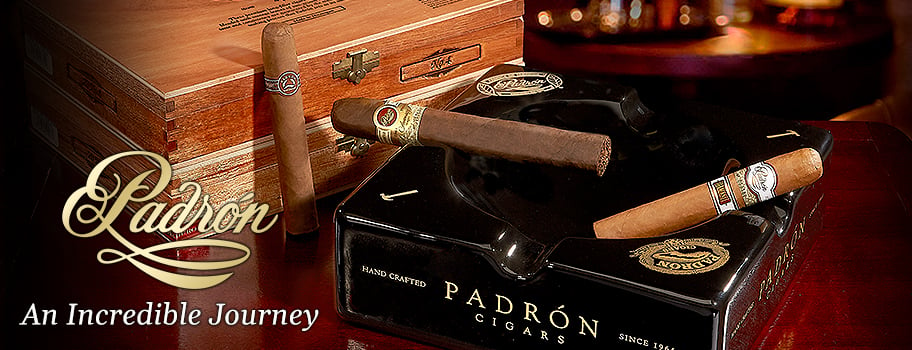
José Orlando Padrón: An Incredible Journey content main image

José Orlando Padrón: An Incredible Journey

Back To Lifestyle & History

By: Quinn Ackerman

In 1944, after José Orlando Padrón graduated from the José Alemán Technical Industrial School in Cuba, he decided to return to his father Francisco’s tobacco farm. Aspiring to follow in the footsteps of generations before him, José Orlando was eager to learn about these bountiful crops. He was tasked with many jobs to learn his family’s trade, from planting crops, to tending the fields, to de-stemming and sorting the leaves.

Beyond the Padrón family farm, however, Cuba was engulfed in conflict. Tensions were mounting between those who supported military dictator Fulgencio Batista, and those who aligned themselves with Fidel Castro. Having left the family farm in the early 1950s to run a copper mine, José saw first-hand what was happening on the island. Padrón made the choice to initially join Castro’s revolutionary army, and it would be a choice that would influence the rest of his life.

On January 1, 1959, Castro marched through Havana and assumed power, shifting various responsibilities from Batista’s friends to various officers in the revolutionary army. He came to then-Lieutenant José Orlando Padrón to offer an ascension through the military ranks, and although he risked his life by declining Castro, the young Padrón made plans to flee just in the nick of time. José Orlando would depart Cuba and fly to Spain, where he would spend several months alone in a foreign land. 

By winter 1961, José would leave Spain aboard the Steamship Covadonga for New York City. He would work in New York until February 1962, when he traveled south by Greyhound bus to Miami. 

Upon his arrival in Florida, José worked landscaping jobs until the day he met the man who would become his long-time friend, Raul Fernández. Fernández worked in carpentry and recruited José Orlando to take up the trade. In a pivotal moment between the two, Fernández would hand a small carpentry hammer, or martillito in Spanish, to José. It was with this small, seemingly insignificant tool that Padrón Cigars would find its beginnings, and symbol of inspiration. José Orlando would go on to work 18-hour days as a carpenter with this very hammer, diligently saving $600. Never forgetting his family’s vocation, he took that money and opened the first Padrón storefront on West Flagler Street in September 1964. José took notice that the cigars he and his fellow exiles used to smoke in Cuba were unavailable in Miami, and so with one roller, he commissioned a blend that was sure to resonate with the community.

Using his strong knowledge of tobacco, José Orlando’s sole torcedor rolled just enough for Padrón to go on sales calls at night to vendors he felt would be specifically interested in selling this cigar to their clientele. The initial fumas, as they were called, were made of 100% Connecticut Broadleaf and featured a curly-headed cap, visually embodying the same cigars fellow exiles once smoked in Cuba. Broadleaf requires a much longer curing process than other strains of tobacco, and so Padrón needed to find a different crop to keep up with local demand for his product A clever researcher, he learned of a microclimate in Nicaragua where the soil quality is similar to Cuba’s coveted province of Pinar del Río. He was approached by a man from a Nicaraguan tobacco company whose samples impressed him, resulting in José’s first trip to Central America to inspect the fields and crops. What he found delighted him, and the story of Padrón cigars as the world knows it was about to begin.

To satisfy an ever-growing demand for his products, and a need for additional experienced workers, José chose to move his production to Estelí, Nicaragua in 1970. Through the following decade, this decision would catapult his business to new heights. With about 300 people now working in his factory, and over 98 acres of tobacco under cultivation, José’s dream was truly coming to fruition. This success did not come without its hurdles, however, as a return to Cuba in 1978 to encourage Castro to release political prisoners was met with widespread criticisms among Miami’s Cuban exile community. Following a published photo of José handing Castro a cigar in local papers, radio personalities and cigar smokers alike turned against the brand, even sparking violence. On three separate occasions, Padrón’s Miami headquarters were struck with various explosive devices, causing panic and turmoil for the family and their business. 

Southwest of Miami, Nicaragua was in the throws of the Sandinista Revolution, an uprising opposed to the Somoza dictatorship. Although Padrón had no part in the Nicaraguan conflict, enraged mobs stormed across Estelí, destroying landmarks, and unfortunately harassing the Padrón factory workers, burning the facility to the ground. To ensure his business would overcome disaster, José continued production by moving to another location in Estelí. It was not until a meeting with Gen. Elias Noguera, a Sandinista commandant, that violence temporarily diminished. José ensured the General that he was politically neutral, and was not aligned with Somoza in any way.

Eventually, however, amidst a U.S. embargo of Nicaraguan goods and continuing tensions, José left the country and moved his productions to Danlí, Honduras. Padrón cigars remained in Honduras until the embargo was lifted in 1990, an event that led Padrón back to Estelí to reunite with his workers. (Some of these employees still work in that very factory today, grateful for José’s loyal attitude towards his own.) These events would serve as a reminder of José Orlando’s resilience, dedication, and unwavering fidelity.

As the years passed by, so did the growth of Padrón’s prowess. Producing some of the most highly-praised premiums ever seen within the cigar industry, José Orlando Padrón surrounded himself with trusted relatives who have learned from him, and together, helped take the business to new heights. Jorge, arguably the most well-known of José’s sons, holds an MBA, and is accredited with using his business acumen to take the company to a place of unprecedented fame and respect. Assuming the role of president after José’s passing in 2017, Padrón cigars continue to receive worldwide acclaim.

Today, Padrón is considered an indispensable brand in the industry. An absolute must-have for enthusiasts and aficionados alike, keeping the business within the family has allowed the foundation built by José Orlando to live on in perpetuity. The passion, the quality, and the honor he instilled in all his cigars can still be easily felt today. While times have changed, the essence of Padrón Cigar’s legendary founder lives on through the retrospective experience his cigars provide. The special, specific blends listed below embody the historic journey José Orlando Padrón took to ensure that his vision, passion, and artistry lived on forever.

Padrón 1964 Anniversary Series 

Ranked #3 in Cigar Aficionado’s Top 25 of 2020, and earning a stunning ‘97’ rating, the Padrón 1964 Anniversary Series is arguably the brand’s most-popular creation. Box-pressed and attractive in look and feel, the blend boasts a rich, complex flavor profile which produces tantalizing aromas. Creamy nuances of coffee, chocolate, and roasted nuts coat the palate with ease. Made with leaf taken exclusively from the top 10% of their aged tobacco stockpiles, Padrón 1964 Anniversary Series helped to set the bar for Nicaraguan puros within the premium marketplace.

Padrón Family Reserve 45 Years Maduro 

Released on September 9, 2009, exactly 45 years after the founding of Padrón Cigars, the Family Reserve features some of the most consistent, expert blending of top-notch tobaccos with an incredible age. One of the stronger Padrón blends available, Family Reserve features some of the oldest leaves saved for use for specialty premiums. Notes of coffee and satisfying spice are featured among a long finish. On the band, the tiny hammer gifted to José Orlando by Raul Fernández can be seen, a warming callback to the brand’s beginnings. The 2009 Cigar Aficionado Cigar of the Year, Padrón Family Reserve No. 45 Maduro received a ‘95’ rating, resulting in Padrón’s third time claiming the #1 spot over the course of six years. 

Padrón Serie 1926 

Considered by many as the greatest cigar the family has ever produced, Serie 1926 is perfect encapsulation of everything the brand signifies. Rich, balanced, and consistent, these premiums spend little to no time aging because, according to Jorgé Padrón, the tobaccos used have already been aged adequately before production. Named after the birth year of José Orlando himself, Serie 1926 serves as a tribute to his life and accomplishments. During the beautifully smooth smoke, rich layers of espresso, earth, cocoa, and dried fruit are enjoyed on the palate. Padrón Serie 1926 received a ‘95’ rating from Cigar Aficionado, and was awarded the #2 spot within the magazine’s Top 25 of 2019.


José Orlando Padrón: An Incredible Journey content main image

José Orlando Padrón: An Incredible Journey

Back To Lifestyle & History

By: Quinn Ackerman

In 1944, after José Orlando Padrón graduated from the José Alemán Technical Industrial School in Cuba, he decided to return to his father Francisco’s tobacco farm. Aspiring to follow in the footsteps of generations before him, José Orlando was eager to learn about these bountiful crops. He was tasked with many jobs to learn his family’s trade, from planting crops, to tending the fields, to de-stemming and sorting the leaves.

Beyond the Padrón family farm, however, Cuba was engulfed in conflict. Tensions were mounting between those who supported military dictator Fulgencio Batista, and those who aligned themselves with Fidel Castro. Having left the family farm in the early 1950s to run a copper mine, José saw first-hand what was happening on the island. Padrón made the choice to initially join Castro’s revolutionary army, and it would be a choice that would influence the rest of his life.

On January 1, 1959, Castro marched through Havana and assumed power, shifting various responsibilities from Batista’s friends to various officers in the revolutionary army. He came to then-Lieutenant José Orlando Padrón to offer an ascension through the military ranks, and although he risked his life by declining Castro, the young Padrón made plans to flee just in the nick of time. José Orlando would depart Cuba and fly to Spain, where he would spend several months alone in a foreign land. 

By winter 1961, José would leave Spain aboard the Steamship Covadonga for New York City. He would work in New York until February 1962, when he traveled south by Greyhound bus to Miami. 

Upon his arrival in Florida, José worked landscaping jobs until the day he met the man who would become his long-time friend, Raul Fernández. Fernández worked in carpentry and recruited José Orlando to take up the trade. In a pivotal moment between the two, Fernández would hand a small carpentry hammer, or martillito in Spanish, to José. It was with this small, seemingly insignificant tool that Padrón Cigars would find its beginnings, and symbol of inspiration. José Orlando would go on to work 18-hour days as a carpenter with this very hammer, diligently saving $600. Never forgetting his family’s vocation, he took that money and opened the first Padrón storefront on West Flagler Street in September 1964. José took notice that the cigars he and his fellow exiles used to smoke in Cuba were unavailable in Miami, and so with one roller, he commissioned a blend that was sure to resonate with the community.

Using his strong knowledge of tobacco, José Orlando’s sole torcedor rolled just enough for Padrón to go on sales calls at night to vendors he felt would be specifically interested in selling this cigar to their clientele. The initial fumas, as they were called, were made of 100% Connecticut Broadleaf and featured a curly-headed cap, visually embodying the same cigars fellow exiles once smoked in Cuba. Broadleaf requires a much longer curing process than other strains of tobacco, and so Padrón needed to find a different crop to keep up with local demand for his product A clever researcher, he learned of a microclimate in Nicaragua where the soil quality is similar to Cuba’s coveted province of Pinar del Río. He was approached by a man from a Nicaraguan tobacco company whose samples impressed him, resulting in José’s first trip to Central America to inspect the fields and crops. What he found delighted him, and the story of Padrón cigars as the world knows it was about to begin.

To satisfy an ever-growing demand for his products, and a need for additional experienced workers, José chose to move his production to Estelí, Nicaragua in 1970. Through the following decade, this decision would catapult his business to new heights. With about 300 people now working in his factory, and over 98 acres of tobacco under cultivation, José’s dream was truly coming to fruition. This success did not come without its hurdles, however, as a return to Cuba in 1978 to encourage Castro to release political prisoners was met with widespread criticisms among Miami’s Cuban exile community. Following a published photo of José handing Castro a cigar in local papers, radio personalities and cigar smokers alike turned against the brand, even sparking violence. On three separate occasions, Padrón’s Miami headquarters were struck with various explosive devices, causing panic and turmoil for the family and their business. 

Southwest of Miami, Nicaragua was in the throws of the Sandinista Revolution, an uprising opposed to the Somoza dictatorship. Although Padrón had no part in the Nicaraguan conflict, enraged mobs stormed across Estelí, destroying landmarks, and unfortunately harassing the Padrón factory workers, burning the facility to the ground. To ensure his business would overcome disaster, José continued production by moving to another location in Estelí. It was not until a meeting with Gen. Elias Noguera, a Sandinista commandant, that violence temporarily diminished. José ensured the General that he was politically neutral, and was not aligned with Somoza in any way.

Eventually, however, amidst a U.S. embargo of Nicaraguan goods and continuing tensions, José left the country and moved his productions to Danlí, Honduras. Padrón cigars remained in Honduras until the embargo was lifted in 1990, an event that led Padrón back to Estelí to reunite with his workers. (Some of these employees still work in that very factory today, grateful for José’s loyal attitude towards his own.) These events would serve as a reminder of José Orlando’s resilience, dedication, and unwavering fidelity.

As the years passed by, so did the growth of Padrón’s prowess. Producing some of the most highly-praised premiums ever seen within the cigar industry, José Orlando Padrón surrounded himself with trusted relatives who have learned from him, and together, helped take the business to new heights. Jorge, arguably the most well-known of José’s sons, holds an MBA, and is accredited with using his business acumen to take the company to a place of unprecedented fame and respect. Assuming the role of president after José’s passing in 2017, Padrón cigars continue to receive worldwide acclaim.

Today, Padrón is considered an indispensable brand in the industry. An absolute must-have for enthusiasts and aficionados alike, keeping the business within the family has allowed the foundation built by José Orlando to live on in perpetuity. The passion, the quality, and the honor he instilled in all his cigars can still be easily felt today. While times have changed, the essence of Padrón Cigar’s legendary founder lives on through the retrospective experience his cigars provide. The special, specific blends listed below embody the historic journey José Orlando Padrón took to ensure that his vision, passion, and artistry lived on forever.

Padrón 1964 Anniversary Series 

Ranked #3 in Cigar Aficionado’s Top 25 of 2020, and earning a stunning ‘97’ rating, the Padrón 1964 Anniversary Series is arguably the brand’s most-popular creation. Box-pressed and attractive in look and feel, the blend boasts a rich, complex flavor profile which produces tantalizing aromas. Creamy nuances of coffee, chocolate, and roasted nuts coat the palate with ease. Made with leaf taken exclusively from the top 10% of their aged tobacco stockpiles, Padrón 1964 Anniversary Series helped to set the bar for Nicaraguan puros within the premium marketplace.

Padrón Family Reserve 45 Years Maduro 

Released on September 9, 2009, exactly 45 years after the founding of Padrón Cigars, the Family Reserve features some of the most consistent, expert blending of top-notch tobaccos with an incredible age. One of the stronger Padrón blends available, Family Reserve features some of the oldest leaves saved for use for specialty premiums. Notes of coffee and satisfying spice are featured among a long finish. On the band, the tiny hammer gifted to José Orlando by Raul Fernández can be seen, a warming callback to the brand’s beginnings. The 2009 Cigar Aficionado Cigar of the Year, Padrón Family Reserve No. 45 Maduro received a ‘95’ rating, resulting in Padrón’s third time claiming the #1 spot over the course of six years. 

Padrón Serie 1926 

Considered by many as the greatest cigar the family has ever produced, Serie 1926 is perfect encapsulation of everything the brand signifies. Rich, balanced, and consistent, these premiums spend little to no time aging because, according to Jorgé Padrón, the tobaccos used have already been aged adequately before production. Named after the birth year of José Orlando himself, Serie 1926 serves as a tribute to his life and accomplishments. During the beautifully smooth smoke, rich layers of espresso, earth, cocoa, and dried fruit are enjoyed on the palate. Padrón Serie 1926 received a ‘95’ rating from Cigar Aficionado, and was awarded the #2 spot within the magazine’s Top 25 of 2019.