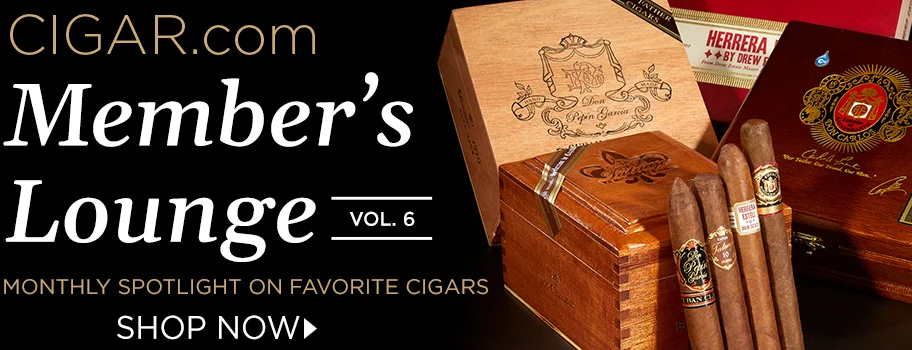
If you’re a fan of Drew
Estate, then it’s likely you know the name Willy Herrera; if their product isn’t
always in your humidor, however, then I think you might want to get to know
Willy and his story.
Always a cigar smoker, Willy
only joined the industry in a professional capacity in the early 2000s. Living
in Miami, he became acquainted with El Titan de Bronze, a very important –
albeit small – boutique factory in Little Havana. El Titan has historically been
home to many key members of the former Cuban cigar-rolling and blending elite
who, like many of their expat peers, came to Miami in search of a better life.
Although Willy knew the types of cigars he enjoyed, he didn’t know how to blend,
so he took it upon himself to learn the craft through a mixture of
trial-and-error, and leaning on the knowledge of the older, more experienced
members of the El Titan team.
Herrera caught the
eye of Jonathan Drew only a few years after working in Little Havana, honing his
craft. In 2010, Drew approached Willy about going down to Estelí to work at La
Gran Fábrica, but for such a job, the interview was anything but traditional.
Over the course of a few days in Nicaragua, Willy’s abilities were put to the
test: he worked nearly non-stop, and at center-stage. The result? A blend that
would eventually become Drew Estate’s Pappy van Winkle Tradition, and the other,
the basis for the Herrera Estelí brand. Proving he was up to the task, Willy
Herrera officially joined Drew Estate as its Master Blender in
2011.
How does one create something new in a sea
of unique and award-winning cigars, though? Herrera’s process starts out by
simply looking for gaps in the Drew Estate portfolio – a little trick of the
trade he picked up from the original masters at El Titan de Bronze. Once that
missing piece is identified comes the hard, sometimes overwhelming work of
physically creating the brand itself. Luckily even during his trial period at
Drew, Willy was given access to every single tobacco available in the factory.
Unlike some of his peers who try to create blends to placate the palates of the
general public, Willy without hesitation will admit that his personal
preferences always come into play, as he would not put his name on something he
himself would not smoke given the
opportunity.
Herrera
Estelí was not just a new brand for the expansive Drew
Estate portfolio, but it was Willy’s debut to a huge cross-section of the
cigar-smoking public. Gone were the early days of his career working in very
small batches and selling to a mostly local clientele; instead, he wanted to
mimic many of Drew’s previous releases by making a bold statement. It took two
years of aging, but 2013 saw Willy’s first large-scale release with the Herrera
Estelí Habano. This premium was immediately met with high praise, including a
‘90’ rating from Cigar Aficionado. Between its construction
and Cuban-esque profile, it was clear that this was something undoubtedly
missing from the traditional Drew
offerings.
Sporting a chestnut-hued Ecuadorian
Habano wrapper, one of the most impressive things I noticed about this cigar
even years ago was its uncanny ability to both work as a unit, and allow
individual tobaccos to shine on their own. A Nicaraguan core held together with
a Honduran binder, there is an overall toasty quality to this blend thanks to
its wrapper, but the binder allows occasional sweet notes to come through with
ease. As for the long-filler tobaccos, it’s Nicaraguan through-and-through, with
well-developed notes of black and white pepper, roasted nuts, earth, and a bit
of dark chocolate. In tandem there’s this beautiful dark chocolate-sea
salt-caramel character that is both intoxicating on the palate and in aroma;
factor in the fluid draw and even burn, and it’s like enjoying a rich dessert
without cheating on your
diet.
Don Pepín García Cuban Classic
1970
I really hope you all are not
sick of me talking about Pepín-made blends, as the man is too prolific and too
important to the post-Castro cigar industry as a whole to be ignored. Many of
you who receive CIGAR.com’s Cigar of the Month Club, or perhaps purchase our
“Expert Picks” already know my fondness for the man, his family and, of course,
his output; if this is your first time, however, buckle up as it’s going to
become fairly apparent just how much I enjoy Pepín’s
talents.
Known simply today as “Don Pepín,” José
García began work in an uncle’s cigar factory at the age of 11. He was born into
a large family of seasoned tobacco farmers and cigar rollers in Báez, in Cuba’s
Villa Clara province. Pepín achieved Class 8 status, which in Cuba is the
highest-possible level for a torecedor, having being labeled island-wide as a
master of his craft. One accolade awarded to him was the Productivity Prize, as
he rolled 320 Julietas (7.0”x48) in four hours. García was often profiled in the
press, where he was described as a “cigar magician,” given his unusual dexterity
at the rolling table.
Having earned titles like
“Cuba’s Most Productive Master Roller,” “Master Blender,” and working for
legendary labels Cohiba, Partagás, and Montecristo, leaving Cuba was the only
way to a better life, and he did just that in 2001. Pepín first went to
Nicaragua before settling in Miami, quickly establishing his first company and
factory, known simply as El Rey de los Habanos (“The King of
Cuban Cigars”) in June 2002. Despite being a small factory, the dozen rollers
Pepín employed there were all Class 8 just like him, and they churned out
800,000 cigars per year. Soon García had to open up another small factory just
to keep up with demand.
After five years in the
States, it was clear to everyone in the industry that José García was a tour de
force, and very determined to be the best in the business. Ashton contracted him
to create their first new brand in many years (San Cristóbal), but brick
& mortar stores as well as other brands came knocking at his door to
bring something illusive to their customers: cigars whose characters were wholly
Cuban, yet used no Cuban tobacco. This ultimately became Pepín’s calling
card.
One year prior to joining forces with
Ashton for their new blend, the Cuban Classic line debuted. Showcasing
Pepín’s extraordinary talent for Cuban-style cigars without the use of illicit
tobacco, it’s complex and refined; using symbolic yet non-flashy artwork, it
emphasizes history and heritage. Each vitola has a year associated with it,
marking important occasions for the García family. Shortly after the Cuban
Classic hit the market, Cigar Aficionado called Pepín “the
next big thing in cigars,” and rightfully so: his handiwork from 2003 to 2007
earned him 90+ ratings in the magazine 21 times during blind taste tests, even
appearing in the illustrious Top 25 List multiple times. If any of you ever
traveled to Little Havana during these years to indulge in a bit of cigar
tourism, I’m sure you’d never think such acclaim could result from a tiny
factory with a plastic sign hanging over it.
I
would be remiss to not mention my personal favorite vitola in the blend is the
long-since discontinued Petit Lancero. I’m a sucker for the more classical
sizes, but I also cannot negate the fact that I’ve smoked multiple boxes of each
vitola over the course of many years. Although we all have our personal
favorites around the CIGAR.com offices, it was a clear choice for me to elect
the Belicoso (5.0”x54) as the “best representative” of the Cuban Classic still
available today.
A Nicaraguan
puro, the 1970 Belicoso – to bluntly state it – eats like a
meal. Remember that scene in “Willy Wonka” when the kids tried the experimental
gum that was created to emulate a multi-course dinner? Welcome to the cigar
version of that experience. There’s a complex array of qualities in this ‘92’
rated premium: woods such as cedar, hickory, and mesquite are masterfully
interwoven with more delicate nuances. Its smoked meat essence never dwarfs
roasted almonds, black pepper, citrus peel, or even the black tea-like finish
which highlights a bit of floral mixed with a toasted sweetness. The Don Pepín
Cuban Classic 1970 is pure, unadulterated richness, and you don’t have to be
rich to afford the indulgence,
either.
Tatuaje 10-Year Anniversary Bon
Chasseur
Owned by Pete Johnson –
heavy metal guitarist-turned-cigar brand owner – I’d be remiss to point out that
despite Pete’s vision and palate, there would be no Tatuaje without Don Pepín
García. The two are very much a pair, and over the years, Pete – even long
before marrying Janny García – was integrated into the family. It actually makes
sense that these two men began working together in 2003 as Pete was always an
active admirer of great Havana cigars, and Pepín had spent most of his life
making those exact cigars in Havana.
Pete grew up
in Maine before making his way to the West Coast at 18 years of age. Even today
you’ll find him wearing black t-shirts, jeans, and boots, and decked out in
tattoos and chunky silver jewelry – his style hasn’t changed much from his
rocker days. What did change was his hobby of cigar-smoking turning into a
full-fledged career, beginning with his days working at the illustrious Grand
Havana Room in Beverly Hills. Johnson started out as a bass guitarist on the
Sunset Strip -- smoking while on stage in famous clubs – but cigars eventually
eclipsed his original dream. The road to get there, however, is an interesting
one.
Like many with musical dreams, young Pete
was low on money, so he supplemented any income made from performing working as
a bouncer in a strip club. He shopped at the now-closed Gus’s Smoke Shop in
Sherman Oaks in the early ‘90s, and Gus’s was somewhat of an institution: having
opened in 1927, Pete became friendly with its fourth owner, Jimmy Hurwitz, after
a fellow customer recommended Johnson for a job. Pete worked on Sundays for six
months assisting in the humidor and mixing pipe tobacco before Jimmy made him a
full-time employee, essentially transforming the humidor into one that showcased
a new plethora of premiums. Once it became apparent to Johnson that he harbored
a more natural instinct with tobacco rather than music, he shifted his sights
toward making a brand.
Visiting factories,
devouring books, and trying to find someone to make a cigar for him was
all-consuming, but he left Gus’s before joining another business in 1996.
Sometime around 1998, Pete caught word that the Grand Havana Room was having an
issue with their humidor, and a conversation with its owner led to a job with
high-profile clientele. Even while working his full-time job, Johnson continued
his search for a manufacturer before meeting Pepín. Once Pete and Pepín crossed
paths, the two men talked about Cuba, what was wanted, and Johnson took out a
Habano that was smoking well at the time as an example; according Pete, he told
Pepín to do what he does best, and thus samples were rolled on the spot. García
even quipped after lighting up Pete’s example that it was an easy one to mimic,
and the two agreed to work together. Within a month, Pepín and son, Jaime, were
boxing up the first release for Tatuaje, which I’m sure by now most know is the
Spanish word for “tattoo.” (Early on some industry personnel called him “Tattoo
Pete,” and despite some push-back regarding Tatuaje, Johnson stuck to his
guns.)
Although there was a mixed reception among
Grand Havana Room clientele when the new brand was placed in the humidor, one
thing was for certain: all who tried the first blend agreed it was unique
amongst a sea of cigars bearing old Cuban brand names, but none of the Cuban
flavor. Over the next couple of years, Pete slowly but surely began securing new
accounts, and once his Tatuaje Cabinet Taíno was named the #4 Cigar of 2005, the
world took notice. That following year he quit his job at Grand Havana, knowing
that if he didn’t make a move now, there was no point in continuing to pursue
this dream.
Fast-forward to 2013, and we have the
blend that caused an obscure brand to become a break-out hit, but this time it’s
a bit updated. Despite the original Brown Label having been made in Pepín’s old
El Rey de los Habanos factory on Calle Ocho, this line extension of sorts is
crafted at the current My Father complex in Nicaragua. When Tatuaje first hit
the shelves, the Garcías were just cementing themselves in the US market; the
runaway success of Pete’s brand made it clear that a larger facility was in
order, hence the move to a vertically-integrated operation in Estelí. While the
two men may have been able to exist without one another in some alternate
universe, it’s impossible to not think of one and conjure up thoughts of the
other these days.
All Tatuaje 10th Anniversary vitolas come
with a redesigned label embossed with gold foil, and are rolled with an uncut
foot. The Bon Chasseur, or “Good Hunter” aptly received a
‘90’ rating from Cigar Aficionado just like its predecessor,
and with it carries some of Pepín’s trademark flavor profile. The only other
change would be the wrapper, as the anniversary blend utilizes an Ecuador Habano
leaf, but this alteration doesn’t detract from the superb delivery – or the
memories of the original release. Medium to full-bodied, this Robusto Extra of
sorts presents heavy notes of dark chocolate, raisin, walnut, spice, and leather
before a finish punctuated by cinnamon. Given all of the blends and brands
created under the Tatuaje umbrella in the past 17 years, if you’re anything like
me, you can’t wait to see what Pete 20th anniversary will have in store for your
humidor.
Arturo Fuente Don Carlos
Presidente
For many a cigar
enthusiast, there is no other name more iconic than Arturo Fuente: this family
brand has enjoyed cult-like status for decades due to a combination of fantastic
marketing, consistency of product, and their hard-to-procure selections such as
the coveted OpusX line. While I could easily write a book on the Fuentes and
their work within the industry, I think it’s best to discuss some of the
family’s history and work leading up to the Don Carlos blend that’s being
featured here.
Despite the huge Fuente footprint
that exists in the Dominican Republic, the Arturo Fuente brand began its life in
West Tampa, Florida in 1912. The company’s namesake was a 24-year-old immigrant
who fled to the States in 1902, after the Spanish-American War ravaged his
native Cuba. While today it’s hard to believe, at the time Fuente established
his factory, he was one of approximately 200 cigar-making facilities in the
Tampa area, and all of them imported tobacco from Cuba. (This was the process of
manufacturing popular at the time, resulting in what became known as Clear
Havana cigars.)
A dozen years passed before the
company was incorporated, but by that time in 1924, Arturo Fuente employed 500
people. A. Fuente & Co. was steadily growing until later that year when
their three-story building burned to the ground. All production was halted until
1946, when Fuente’s younger son, Carlos, was a mere 11 years old. It was a
difficult road to get back to producing sizable quantities of again, and for
this, Arturo enlisted not just the help of the whole family, but often included
friends and neighbors. Carlos Sr., aka “Don Carlos,” always had fond memories of
being a kid and rolling cigars after school, but his brother did not: the two,
once done with their brotherly squabbles, decided working as a rolling team
meant they’d finish faster, thus being allowed to play like kids sooner rather
than later.
While Arturo was planning to pass on
the business to his eldest son, Carlos – despite being the youngest – was always
the more eager of the two to make cigars for the family. In 1956 at the tender
age of 21, father offered the business to son, and Carlos bought out his brother
for $1. Carlos’ purchase amounted to $1,161 in assets and zero debt, with the
company only producing a few thousand cigars per year. He was ambitious, and
first sought out to establish new accounts within the state of Florida before
looking north toward New York. Leaning heavily on the Hispanic community to
garner sales and increase brand awareness proved difficult, however, as at this
point in time smokers were brand loyal, rarely being swayed to successfully
switch to another manufacturer’s product. Another issue faced by Carlos Sr.
occurred a few years after assuming control of the family business: the Embargo
instituted by the US against Cuba.
Although most
enthusiasts today associate the Arturo Fuente brand with the Dominican Republic
due to their massive presence on the island, operations at what is known as
Tabacalera A. Fuente didn’t begin in Santiago until 1980; four years before
that, however, the world was first introduced to the Don Carlos blend. It also
wasn’t something made in tribute to Carlos Sr., either, but actually a cigar
blended to his specific taste. The blend concept itself is 44 years old now, but
it still shines brightly thanks to its capa (or wrapper),
which is none other than a genuine Meerapfel Cameroon
leaf.
The history between both the Fuente and Meerapfel
families is a long one, and the two together have created a number of legendary
blends that continue to garner accolades from Cigar
Aficionado and Cigar Journal worldwide. The
Meerapfels are essentially the supplier for the
none-too-frequently-utilized Central African tobacco, as it’s not easy to grow
or work with, and thus can be expensive to those seeking wholesale quantities
for cigar-rolling purposes.
Now down to brass tacks as they
say: what makes the Arturo Fuente Don
Carlos such an important, and highly-rated blend? It’s
sort of a love letter to cigar-making by the Fuentes and Meerapfels, each
highlighting the lands which together make these families famous. An aged
Cameroon wrapper atop a Dominican binder and long-filler blend have been made in
limited quantities since its inception, and that’s because the Fuentes have, for
40+ years now, set aside bales of tobacco needed for special blends each year to
continue the tradition. Like a vintner with a specific wine, it’s the
responsibility of the masters behind the craft to keep things consistent, and
that’s even more difficult when dealing with long-aged raw product whose
characteristics can vastly change over time.
The
Don Carlos blend has received numerous 90+ ratings in Cigar
Aficionado, in 2015 it was award a ‘94’ and named the #4 Cigar of the
Year. Its Cameroon wrapper provides just the right amount of sweet-and-sour to
the woody, slightly spicy, and nutty Dominican interior. Together there is this
zestiness that provides the palate with notes of candied citrus, dry-roasted
almond, raw cacao, and cane sugar which makes for an exceptional experience.
Carlos Fuente Sr. may no longer be with us, but his tastes and style very much
live-on in his namesake blend: clean, well-dressed, sweet, engaging, and
memorable, all of these adjectives could equally describe the man as much as
they can describe his cigar.
If you’re a fan of Drew
Estate, then it’s likely you know the name Willy Herrera; if their product isn’t
always in your humidor, however, then I think you might want to get to know
Willy and his story.
Always a cigar smoker, Willy
only joined the industry in a professional capacity in the early 2000s. Living
in Miami, he became acquainted with El Titan de Bronze, a very important –
albeit small – boutique factory in Little Havana. El Titan has historically been
home to many key members of the former Cuban cigar-rolling and blending elite
who, like many of their expat peers, came to Miami in search of a better life.
Although Willy knew the types of cigars he enjoyed, he didn’t know how to blend,
so he took it upon himself to learn the craft through a mixture of
trial-and-error, and leaning on the knowledge of the older, more experienced
members of the El Titan team.
Herrera caught the
eye of Jonathan Drew only a few years after working in Little Havana, honing his
craft. In 2010, Drew approached Willy about going down to Estelí to work at La
Gran Fábrica, but for such a job, the interview was anything but traditional.
Over the course of a few days in Nicaragua, Willy’s abilities were put to the
test: he worked nearly non-stop, and at center-stage. The result? A blend that
would eventually become Drew Estate’s Pappy van Winkle Tradition, and the other,
the basis for the Herrera Estelí brand. Proving he was up to the task, Willy
Herrera officially joined Drew Estate as its Master Blender in
2011.
How does one create something new in a sea
of unique and award-winning cigars, though? Herrera’s process starts out by
simply looking for gaps in the Drew Estate portfolio – a little trick of the
trade he picked up from the original masters at El Titan de Bronze. Once that
missing piece is identified comes the hard, sometimes overwhelming work of
physically creating the brand itself. Luckily even during his trial period at
Drew, Willy was given access to every single tobacco available in the factory.
Unlike some of his peers who try to create blends to placate the palates of the
general public, Willy without hesitation will admit that his personal
preferences always come into play, as he would not put his name on something he
himself would not smoke given the
opportunity.
Herrera
Estelí was not just a new brand for the expansive Drew
Estate portfolio, but it was Willy’s debut to a huge cross-section of the
cigar-smoking public. Gone were the early days of his career working in very
small batches and selling to a mostly local clientele; instead, he wanted to
mimic many of Drew’s previous releases by making a bold statement. It took two
years of aging, but 2013 saw Willy’s first large-scale release with the Herrera
Estelí Habano. This premium was immediately met with high praise, including a
‘90’ rating from Cigar Aficionado. Between its construction
and Cuban-esque profile, it was clear that this was something undoubtedly
missing from the traditional Drew
offerings.
Sporting a chestnut-hued Ecuadorian
Habano wrapper, one of the most impressive things I noticed about this cigar
even years ago was its uncanny ability to both work as a unit, and allow
individual tobaccos to shine on their own. A Nicaraguan core held together with
a Honduran binder, there is an overall toasty quality to this blend thanks to
its wrapper, but the binder allows occasional sweet notes to come through with
ease. As for the long-filler tobaccos, it’s Nicaraguan through-and-through, with
well-developed notes of black and white pepper, roasted nuts, earth, and a bit
of dark chocolate. In tandem there’s this beautiful dark chocolate-sea
salt-caramel character that is both intoxicating on the palate and in aroma;
factor in the fluid draw and even burn, and it’s like enjoying a rich dessert
without cheating on your
diet.
Don Pepín García Cuban Classic
1970
I really hope you all are not
sick of me talking about Pepín-made blends, as the man is too prolific and too
important to the post-Castro cigar industry as a whole to be ignored. Many of
you who receive CIGAR.com’s Cigar of the Month Club, or perhaps purchase our
“Expert Picks” already know my fondness for the man, his family and, of course,
his output; if this is your first time, however, buckle up as it’s going to
become fairly apparent just how much I enjoy Pepín’s
talents.
Known simply today as “Don Pepín,” José
García began work in an uncle’s cigar factory at the age of 11. He was born into
a large family of seasoned tobacco farmers and cigar rollers in Báez, in Cuba’s
Villa Clara province. Pepín achieved Class 8 status, which in Cuba is the
highest-possible level for a torecedor, having being labeled island-wide as a
master of his craft. One accolade awarded to him was the Productivity Prize, as
he rolled 320 Julietas (7.0”x48) in four hours. García was often profiled in the
press, where he was described as a “cigar magician,” given his unusual dexterity
at the rolling table.
Having earned titles like
“Cuba’s Most Productive Master Roller,” “Master Blender,” and working for
legendary labels Cohiba, Partagás, and Montecristo, leaving Cuba was the only
way to a better life, and he did just that in 2001. Pepín first went to
Nicaragua before settling in Miami, quickly establishing his first company and
factory, known simply as El Rey de los Habanos (“The King of
Cuban Cigars”) in June 2002. Despite being a small factory, the dozen rollers
Pepín employed there were all Class 8 just like him, and they churned out
800,000 cigars per year. Soon García had to open up another small factory just
to keep up with demand.
After five years in the
States, it was clear to everyone in the industry that José García was a tour de
force, and very determined to be the best in the business. Ashton contracted him
to create their first new brand in many years (San Cristóbal), but brick
& mortar stores as well as other brands came knocking at his door to
bring something illusive to their customers: cigars whose characters were wholly
Cuban, yet used no Cuban tobacco. This ultimately became Pepín’s calling
card.
One year prior to joining forces with
Ashton for their new blend, the Cuban Classic line debuted. Showcasing
Pepín’s extraordinary talent for Cuban-style cigars without the use of illicit
tobacco, it’s complex and refined; using symbolic yet non-flashy artwork, it
emphasizes history and heritage. Each vitola has a year associated with it,
marking important occasions for the García family. Shortly after the Cuban
Classic hit the market, Cigar Aficionado called Pepín “the
next big thing in cigars,” and rightfully so: his handiwork from 2003 to 2007
earned him 90+ ratings in the magazine 21 times during blind taste tests, even
appearing in the illustrious Top 25 List multiple times. If any of you ever
traveled to Little Havana during these years to indulge in a bit of cigar
tourism, I’m sure you’d never think such acclaim could result from a tiny
factory with a plastic sign hanging over it.
I
would be remiss to not mention my personal favorite vitola in the blend is the
long-since discontinued Petit Lancero. I’m a sucker for the more classical
sizes, but I also cannot negate the fact that I’ve smoked multiple boxes of each
vitola over the course of many years. Although we all have our personal
favorites around the CIGAR.com offices, it was a clear choice for me to elect
the Belicoso (5.0”x54) as the “best representative” of the Cuban Classic still
available today.
A Nicaraguan
puro, the 1970 Belicoso – to bluntly state it – eats like a
meal. Remember that scene in “Willy Wonka” when the kids tried the experimental
gum that was created to emulate a multi-course dinner? Welcome to the cigar
version of that experience. There’s a complex array of qualities in this ‘92’
rated premium: woods such as cedar, hickory, and mesquite are masterfully
interwoven with more delicate nuances. Its smoked meat essence never dwarfs
roasted almonds, black pepper, citrus peel, or even the black tea-like finish
which highlights a bit of floral mixed with a toasted sweetness. The Don Pepín
Cuban Classic 1970 is pure, unadulterated richness, and you don’t have to be
rich to afford the indulgence,
either.
Tatuaje 10-Year Anniversary Bon
Chasseur
Owned by Pete Johnson –
heavy metal guitarist-turned-cigar brand owner – I’d be remiss to point out that
despite Pete’s vision and palate, there would be no Tatuaje without Don Pepín
García. The two are very much a pair, and over the years, Pete – even long
before marrying Janny García – was integrated into the family. It actually makes
sense that these two men began working together in 2003 as Pete was always an
active admirer of great Havana cigars, and Pepín had spent most of his life
making those exact cigars in Havana.
Pete grew up
in Maine before making his way to the West Coast at 18 years of age. Even today
you’ll find him wearing black t-shirts, jeans, and boots, and decked out in
tattoos and chunky silver jewelry – his style hasn’t changed much from his
rocker days. What did change was his hobby of cigar-smoking turning into a
full-fledged career, beginning with his days working at the illustrious Grand
Havana Room in Beverly Hills. Johnson started out as a bass guitarist on the
Sunset Strip -- smoking while on stage in famous clubs – but cigars eventually
eclipsed his original dream. The road to get there, however, is an interesting
one.
Like many with musical dreams, young Pete
was low on money, so he supplemented any income made from performing working as
a bouncer in a strip club. He shopped at the now-closed Gus’s Smoke Shop in
Sherman Oaks in the early ‘90s, and Gus’s was somewhat of an institution: having
opened in 1927, Pete became friendly with its fourth owner, Jimmy Hurwitz, after
a fellow customer recommended Johnson for a job. Pete worked on Sundays for six
months assisting in the humidor and mixing pipe tobacco before Jimmy made him a
full-time employee, essentially transforming the humidor into one that showcased
a new plethora of premiums. Once it became apparent to Johnson that he harbored
a more natural instinct with tobacco rather than music, he shifted his sights
toward making a brand.
Visiting factories,
devouring books, and trying to find someone to make a cigar for him was
all-consuming, but he left Gus’s before joining another business in 1996.
Sometime around 1998, Pete caught word that the Grand Havana Room was having an
issue with their humidor, and a conversation with its owner led to a job with
high-profile clientele. Even while working his full-time job, Johnson continued
his search for a manufacturer before meeting Pepín. Once Pete and Pepín crossed
paths, the two men talked about Cuba, what was wanted, and Johnson took out a
Habano that was smoking well at the time as an example; according Pete, he told
Pepín to do what he does best, and thus samples were rolled on the spot. García
even quipped after lighting up Pete’s example that it was an easy one to mimic,
and the two agreed to work together. Within a month, Pepín and son, Jaime, were
boxing up the first release for Tatuaje, which I’m sure by now most know is the
Spanish word for “tattoo.” (Early on some industry personnel called him “Tattoo
Pete,” and despite some push-back regarding Tatuaje, Johnson stuck to his
guns.)
Although there was a mixed reception among
Grand Havana Room clientele when the new brand was placed in the humidor, one
thing was for certain: all who tried the first blend agreed it was unique
amongst a sea of cigars bearing old Cuban brand names, but none of the Cuban
flavor. Over the next couple of years, Pete slowly but surely began securing new
accounts, and once his Tatuaje Cabinet Taíno was named the #4 Cigar of 2005, the
world took notice. That following year he quit his job at Grand Havana, knowing
that if he didn’t make a move now, there was no point in continuing to pursue
this dream.
Fast-forward to 2013, and we have the
blend that caused an obscure brand to become a break-out hit, but this time it’s
a bit updated. Despite the original Brown Label having been made in Pepín’s old
El Rey de los Habanos factory on Calle Ocho, this line extension of sorts is
crafted at the current My Father complex in Nicaragua. When Tatuaje first hit
the shelves, the Garcías were just cementing themselves in the US market; the
runaway success of Pete’s brand made it clear that a larger facility was in
order, hence the move to a vertically-integrated operation in Estelí. While the
two men may have been able to exist without one another in some alternate
universe, it’s impossible to not think of one and conjure up thoughts of the
other these days.
All Tatuaje 10th Anniversary vitolas come
with a redesigned label embossed with gold foil, and are rolled with an uncut
foot. The Bon Chasseur, or “Good Hunter” aptly received a
‘90’ rating from Cigar Aficionado just like its predecessor,
and with it carries some of Pepín’s trademark flavor profile. The only other
change would be the wrapper, as the anniversary blend utilizes an Ecuador Habano
leaf, but this alteration doesn’t detract from the superb delivery – or the
memories of the original release. Medium to full-bodied, this Robusto Extra of
sorts presents heavy notes of dark chocolate, raisin, walnut, spice, and leather
before a finish punctuated by cinnamon. Given all of the blends and brands
created under the Tatuaje umbrella in the past 17 years, if you’re anything like
me, you can’t wait to see what Pete 20th anniversary will have in store for your
humidor.
Arturo Fuente Don Carlos
Presidente
For many a cigar
enthusiast, there is no other name more iconic than Arturo Fuente: this family
brand has enjoyed cult-like status for decades due to a combination of fantastic
marketing, consistency of product, and their hard-to-procure selections such as
the coveted OpusX line. While I could easily write a book on the Fuentes and
their work within the industry, I think it’s best to discuss some of the
family’s history and work leading up to the Don Carlos blend that’s being
featured here.
Despite the huge Fuente footprint
that exists in the Dominican Republic, the Arturo Fuente brand began its life in
West Tampa, Florida in 1912. The company’s namesake was a 24-year-old immigrant
who fled to the States in 1902, after the Spanish-American War ravaged his
native Cuba. While today it’s hard to believe, at the time Fuente established
his factory, he was one of approximately 200 cigar-making facilities in the
Tampa area, and all of them imported tobacco from Cuba. (This was the process of
manufacturing popular at the time, resulting in what became known as Clear
Havana cigars.)
A dozen years passed before the
company was incorporated, but by that time in 1924, Arturo Fuente employed 500
people. A. Fuente & Co. was steadily growing until later that year when
their three-story building burned to the ground. All production was halted until
1946, when Fuente’s younger son, Carlos, was a mere 11 years old. It was a
difficult road to get back to producing sizable quantities of again, and for
this, Arturo enlisted not just the help of the whole family, but often included
friends and neighbors. Carlos Sr., aka “Don Carlos,” always had fond memories of
being a kid and rolling cigars after school, but his brother did not: the two,
once done with their brotherly squabbles, decided working as a rolling team
meant they’d finish faster, thus being allowed to play like kids sooner rather
than later.
While Arturo was planning to pass on
the business to his eldest son, Carlos – despite being the youngest – was always
the more eager of the two to make cigars for the family. In 1956 at the tender
age of 21, father offered the business to son, and Carlos bought out his brother
for $1. Carlos’ purchase amounted to $1,161 in assets and zero debt, with the
company only producing a few thousand cigars per year. He was ambitious, and
first sought out to establish new accounts within the state of Florida before
looking north toward New York. Leaning heavily on the Hispanic community to
garner sales and increase brand awareness proved difficult, however, as at this
point in time smokers were brand loyal, rarely being swayed to successfully
switch to another manufacturer’s product. Another issue faced by Carlos Sr.
occurred a few years after assuming control of the family business: the Embargo
instituted by the US against Cuba.
Although most
enthusiasts today associate the Arturo Fuente brand with the Dominican Republic
due to their massive presence on the island, operations at what is known as
Tabacalera A. Fuente didn’t begin in Santiago until 1980; four years before
that, however, the world was first introduced to the Don Carlos blend. It also
wasn’t something made in tribute to Carlos Sr., either, but actually a cigar
blended to his specific taste. The blend concept itself is 44 years old now, but
it still shines brightly thanks to its capa (or wrapper),
which is none other than a genuine Meerapfel Cameroon
leaf.
The history between both the Fuente and Meerapfel
families is a long one, and the two together have created a number of legendary
blends that continue to garner accolades from Cigar
Aficionado and Cigar Journal worldwide. The
Meerapfels are essentially the supplier for the
none-too-frequently-utilized Central African tobacco, as it’s not easy to grow
or work with, and thus can be expensive to those seeking wholesale quantities
for cigar-rolling purposes.
Now down to brass tacks as they
say: what makes the Arturo Fuente Don
Carlos such an important, and highly-rated blend? It’s
sort of a love letter to cigar-making by the Fuentes and Meerapfels, each
highlighting the lands which together make these families famous. An aged
Cameroon wrapper atop a Dominican binder and long-filler blend have been made in
limited quantities since its inception, and that’s because the Fuentes have, for
40+ years now, set aside bales of tobacco needed for special blends each year to
continue the tradition. Like a vintner with a specific wine, it’s the
responsibility of the masters behind the craft to keep things consistent, and
that’s even more difficult when dealing with long-aged raw product whose
characteristics can vastly change over time.
The
Don Carlos blend has received numerous 90+ ratings in Cigar
Aficionado, in 2015 it was award a ‘94’ and named the #4 Cigar of the
Year. Its Cameroon wrapper provides just the right amount of sweet-and-sour to
the woody, slightly spicy, and nutty Dominican interior. Together there is this
zestiness that provides the palate with notes of candied citrus, dry-roasted
almond, raw cacao, and cane sugar which makes for an exceptional experience.
Carlos Fuente Sr. may no longer be with us, but his tastes and style very much
live-on in his namesake blend: clean, well-dressed, sweet, engaging, and
memorable, all of these adjectives could equally describe the man as much as
they can describe his cigar.
Email Sign Up
Stay connected and sign-up for emails to get exclusive deals and event info.
Welcome, and thank you for joining the CIGAR.com community. We are the Home for Cigar Enthusiasts - it's our passion. Keep an eye out on your inbox for early access to new arrivals and exclusive promotions.
Product Re-Stock Notification
You have exceeded the allowable number of different credit cards attempted
No further attempts will be allowed online. For security purposes, please call our customer service department at 1-800-357-9800 if you still wish to complete your order.