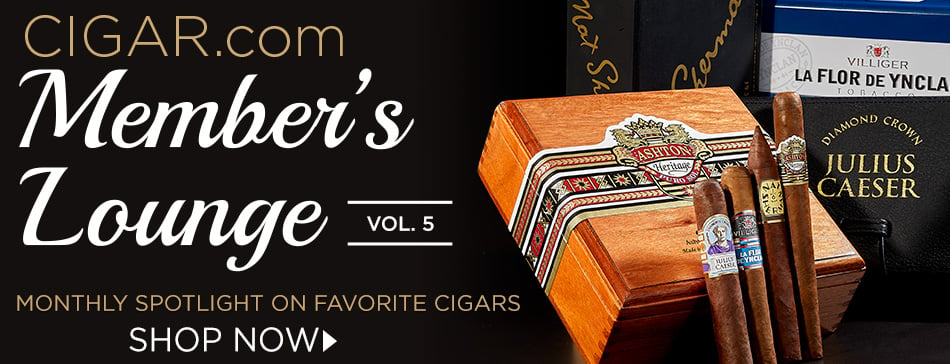
One just doesn’t become America’s oldest premium cigar manufacturing
family without putting in a lot of consistent effort, as any member of the
Newman clan would tell you. Now run by third and fourth generation descendants
of their founder, Julius Caeser Newman – J.C. for short – they’ve come a long
way from cigar rolling in a Cleveland barn back in
1895.
J.C. started work in 1890 as an apprentice; his mother,
Hannah, paid $3.00 per month so her son could learn the trade. They were recent
immigrants from Hungary, and anyone who could contribute to the household was
expected to do so. One of my favorite anecdotes about J.C. is the misspelling of
“Caesar”: upon arrival at Ellis Island, immigration officials told him he’d need
a middle name. Since his first name was Julius, they suggested Caesar, but it
was spelled incorrectly, and the young boy stuck with it for the remainder of
his life.
After completing his apprenticeship, J.C. began work but
was soon met with a massive recession. He was laid-off, an immigrant, and at 20,
needed to secure an income, so he decided to achieve the illusive “American
dream” by founding his own company. Beginning in the family barn, Newman created
a rolling table from old boards, borrowed $50 for tobacco, and got to work on
his first 500-cigar order from the family grocer. His initial brand was simply
known as “A.B.C.” which stood for Akron, Bedford, and Cleveland, aka the local
streetcar line
. Over the years the business expanded, J.C. married and
had four children, and by 1916, expanded with the addition of two more Ohio
factories that employed 700 people. They manufactured then-famous cigars like
the Judge Wright brand, but between the Great Depression and then World War II,
prospering during a time when many Americans didn’t have disposable income at
any level was difficult. Sons Stanford and Miller Newman joined the family
business after returning home from war, and helped lay the groundwork for the
J.C. Newman Cigar Company many aficionados know and love
today.
In the early-to-mid 1950s, Stanford was sent on a
scouting mission to Florida to find a new factory, as the company wished to both
expand its operations, and be closer to its primary source of premium tobacco.
(Cuba.) Young Stanford found a prime locale in historic Ybor City – the largest
factory in the Tampa area, and built by none other than Cuban revolutionary
Vincent Ybor back in 1886. The company and the Newmans made the move in 1954,
and went on to produce more Clear Havana cigars than any other factory in the
world.
Aside from continuing to create and distribute their own
brands, Stanford’s keen eye for business had him on the hunt again, this time
for a pre-existing brand to purchase and fold into the company portfolio. Less
than a year after J.C.’s death in 1958, Stanford purchased the legendary
Cuesta-Rey brand from Karl Cuesta, setting his sights on something different.
Cuesta-Rey was famous for their 26¢ palma cigar, but Newman created a special
new packaging of two 25-count mazos packed in a cedar chest,
thus introducing the now legendary Cuesta-Rey #95 to the market – and at a
higher price and profit to boot.
By the 1980s, 14 Newman relatives
owned shares of the business, but not all had the same vision for its future
amidst a two decades-long slump. Stanford once again new a change needed to be
made, so along with his sons Eric and Bobby, they leveraged all of their assets
and bought out their relatives on Valentine’s Day 1986 to purchase the company
out-right. A few weeks later the fates intervened when Carlos Fuente, Sr. called
Stanford: the Fuentes wanted to concentrate their efforts on making premium
cigars in the Dominican Republic, but they did not want to abandon their
Tampa-made brands. The two struck a deal: the Newmans would manufacture Fuente’s
Tampa cigars, and the Fuentes would make cigars in the Dominican for J.C.
Newman. Their partnership expanded in the 1990s and still exists
today.
Despite all of their high ratings and central placement
in humidors around the country, I wanted to focus on the company’s Diamond Crown Julius
Caeser cigar because of its multi-faceted significance to
the Newman family. Diamond Crown was one of J.C.’s earliest brands, and Stanford
re-launched it in 1995 to commemorate the centenary of the company. 15 years
later, the Julius Caeser was released in commemoration of J.C.’s 135th birthday,
and the business’ 115th anniversary. The blend itself has seen numerous
‘92’-plus ratings, it has graced Cigar Aficionado’s Top 25
List multiple times, and was named Cigar & Spirits
Magazine’s Top Cigar of
2017.
Rolled and aged for five years at Tabacalera A. Fuente in
the Dominican, you can imagine that a cigar of such personal significance
utilizes top tobacco and held to the highest standards of quality control. An
Ecuadorian Habano wrapper, Dominican binder, and long-filler blend of Central
American and Dominican tobaccos smoke in complete harmony. A medium-bodied cigar
laden with palate-pleasing contrasts, there are prominent notes of cocoa, honey,
Darjeeling tea, spice, and a hint of lemon peel. While certainly a blend that is
already aged prior to distribution, if you have the patience, buy a box and age
half of them – I guarantee you’ll thank me two years from date of
purchase.
Villiger La Flor de
Ynclan
Unless you are a fan of machine-made cigars or spend a lot of time
in Europe, the brand name Villiger might not have been terribly familiar to you
until a few years ago. They are a power-player within the industry worldwide,
but most know them for their Villiger Exports – these small, trunk-pressed
cigars in mid-century style packaging – yet a change in philosophy circa 2013
allowed the Swiss company to make a splash into the premium
arena.
Founded in 1888 in Pfeffikon, Switzerland by Jean
Villiger, the company’s headquarters still remain there today. Aficionados will
know the name Heinrich Villiger – Jean’s grandson – is still sharp,
well-dressed, and sharp-minded, and at 90 years of age, continues to steer the
proverbial ship. Living in the US it might be hard to fathom, but Villiger Söhne
AG produces over a million European-style (dry cured) cigars per year, and is
the exclusive importer and distributor of Cuban cigars to five different
European countries. This is all in addition to its impressive portfolio of
premium cigars in the US, mind you, and a portfolio stateside that continues to
grow amid rave reviews.
Jean Villiger was not a tobacco man
at first, but he was a finance man, having managed one of the big cheroot
companies in the late 19th century. He wanted to open up his own factory, so his
then-boss loaned him the money. Unfortunately Jean died in 1902 at 42 years-old,
and for 16 years, his wife, Louise, ran the business and helped it to continue
on its successful path – something rarely heard of for that time. Their only
child was Heinrich’s father, and once he was old enough to take the helm, he did
so along with an uncle. Perhaps the most intriguing part of this early story is
that his uncle had no children, so when he was ready, that man sold his shares
to Heinrich’s father; once Heinrich’s father passed on, through the last will
and testament, Heinrich became the sole shareholder of Villiger
Cigars.
There was, however, this intermingling into the American
market many years ago: shortly after World War II, Villiger began the export of
their machine-made cigars to the US, as soldiers who fought in Germany became
fond of the products. (Germany is still their biggest market today, with
Villiger holding a 70% market share.) After completing formal training in raw
tobacco and keenly participating in tobacco auctions, a dashing young Heinrich
went off to New York City in 1964, and introduced his company at the prestigious
World’s Fair. Heinrich has made over 100 trips to Cuba for tobacco and
befriended some of the greatest names in business there, most notably the late
Don Alejandro Robaina. Interesting fact: after President Kennedy enacted the
embargo, the Cuban government specifically met with Villiger to offer them
never-before-seen grades of Cuban leaf, and thus ushering in an important
alliance between the fragile Cuba and powerhouse Swiss
economy.
While we’re technically here to talk premium cigars in
the States, I must preface that Villiger does not sneak any Cuban tobacco into
their handmades for the US market, so get that notion out of your head. Instead,
they still demand the highest quality leaf available, and given their ratings
and accolades from Cigar Aficionado, this small portion of
the company business is growing steadily. Villiger only opened up its North
American offices in Miami in 2016, and one year later, introduced La Flor de
Ynclan – that same year it was rated ‘93’ and debuted as the #10 Cigar of 2017.
To say things started off on the right foot would be a modest statement, but
this was not the first time the US market saw
Ynclan.
Heinrich Villiger along with Master Blender José Matias
Maragoto of the ABAM factory in the Dominican Republic are responsible for La
Flor de Ynclan, and the duo have a nearly 25-year-old working relationship. In
the mid-‘90s, Maragoto left Cuba for the Dominican and was essentially another
unknown Cuban cigar maker trying to carve out a better life. Maragoto, like
Villiger, was ambitious, perhaps that’s what helped forge their bond; today,
José oversees all Villiger cigars made in the Dominican Republic, and he
continues to work closely with Heinrich on many
projects.
La Flor de Ynclan actually began its life as an old Cuban
brand in the early 1900s. Heinrich and José’s first attempt at remaking this
blend for a non-Cuban audience in 2007 was a bit of a flop: the cigar was okay,
but both men agreed it didn’t live up to their expectations. They remained
patient instead of scrapping version 2.0; years and years of revisiting the
Dominican, Ecuadorian, Indonesian, and Nicaraguan tobaccos they knew were right
for the job led to a number of test blends. Maragoto regularly worked with the
aging leaves, adjusting ratios and figuring out which vitolas worked best. While
it took 10 years before the masterpiece of which they dreamed came to fruition,
both men are more than pleased with end result. With its medium to full-bodied
notes of bittersweet chocolate, walnut, dried citrus, and salt, it just goes to
show you that good things truly do take
time.
Nat Sherman Timeless Nicaraguan
652T
Note: In a
crazy twist of fate, I wrote this piece on Nat Sherman and the brand’s evolution
on the very same day its employees were internally notified by parent company,
Altria, that this 90-year-old American institution would soon cease operations.
As a proud Nat Sherman alumnus, I urge any Sherman fans out there to purchase
your favorites and keep them in your humidor, as soon the name and their cigars
will be lost to
history.
*
* * *
*
Nat Sherman. Just typing the name
brings back a multitude of fond memories, as the Sherman family gave me my start
in the premium cigar industry back in the mid-2000s. I grew up knowing the
Sherman name as two generations of my family smoked their cigars and pipe
tobacco blends – my Great-Grandfather’s insurance brokerage was even in the same
building as Nat’s original store in downtown Manhattan – the same
Great-Grandfather who immigrated from Eastern Europe as a 12-year-old child,
only to wind up on the Lower East Side to learn English selling cigars and
cigarettes in a burlesque house. (Hey, it was a very different time
then!)
The story of Nat Sherman is the story of an enterprising
man. He ran a prominent speakeasy in New York during Prohibition, and via family
lore, became part owner of Traub Brothers and Bear, a cigar maker who was then
known for its Epoca brand. (The acquisition of this business was the result of
the settling of a gambling debt.) Epoca was made in Havana and Tampa, and once
Sherman saw the rise in profits by having his own brand of premiums offered in
his nightclub, he bought out his partner to become sole
owner.
Although Nat first had a small retail space in
the Financial District, the brand’s true major retail location was at 1400
Broadway not far from Bryant Park. Prominent real estate developer Abe Gubertz
had cash-flow problems during the construction of his 38-story building at the
address, so Nat gave him a loan, accepting a piece of the lobby to sell Nat
Sherman cigars and cigarettes as partial repayment. Aside from selling in spades
to those who eventually worked in the building, Nat’s personality coupled with
the increasing popularity of his products garnered the attention of many a New
Yorker, as well as many a celebrity. At this time and until the embargo, Nat
Sherman was the exclusive importer and distributor of
the Cuban-made Bolivar brand in the
US.
The 1950s through the mid-1980s continued to be very
successful for Nat and his brand. He was a pioneer in producing and mailing out
catalogues to all customers on his expansive mailing list, that way he could
ensure orders from those who didn’t live in New York, as well as further cement
himself as a national brand. He introduced the plastic-tipped cigar to the
industry, and was a pioneer in creating what was branded as a “luxury
cigarette,” which for Nat meant they were made of cigar tobacco instead of the
often-cheaper and harsher cigarette tobacco varietals. When the company expanded
to include pipes and pipe tobacco in the 1960s, Nat Sherman’s pipe department
was the biggest in New York and
nationwide.
After overseeing a clientele that
consisted of everyday people, the wealthy, mobsters, celebrities, and tourists
for decades, Nat passed away in 1989. The company had moved locations again
earlier in 1976 to 711 Fifth Avenue – near the famous Plaza Hotel and across
from Tiffany & Co’s former headquarters – but a paradigm shift was about
to begin. Cigars in general were on the decline, and a lack of modernization
within the branding of the Nat Sherman portfolio began to take its effects on
the company’s reputation as other bigger (and former Cuban) brands started to
cement themselves in the US market.
Once the “cigar boom” came to
fruition in the US, Nat Sherman was kind of left behind. They had loyal cigar
and cigarette customers, but were unmentioned among a sea of new brands, new
ideas, and new smokers who often associated Sherman brand products with their
Grandfathers. After multiple turnovers in retail management and product
development – and a couple of years before the remaining Sherman family members
sold the company to tobacco giant Altria – the world was introduced to the
Timeless Collection.
What began with the Timeless
Dominican release made at MATASA (Quesada Cigars) had spurred the Timeless
Nicaraguan made by Plasencia. (Both the Quesadas and the Plasencias are longtime
friends of each other and the Sherman family, as well as Michael Herklots.)
Anyone familiar with older Sherman branding knows that the look of the Timeless
brand is quintessential Nat: the Art Deco marquis font, the ode to the iconic
clock, and the acknowledgment of the brand’s beginnings in 1930. (Each cigar box
even boasts a facsimile of Sherman’s signature in a muted gold tone against
matte black.) There is this classic yet somewhat quiet elegance about it all
which I personally find amusing, as Nat often rattled off Borscht Belt
one-liners, knew the cost down to the penny of every single supply, and loved a
rocks glass filled with Dewer’s each Friday afternoon once the store
closed.
The Timeless Collection ushered in a new era for the
Sherman brand, both in terms of premium products available to consumers, but
also in terms of a swath of new clientele who may have never had a Sherman cigar
before. While both the Dominican and Nicaraguan blends have been rated ‘91’-plus
by Cigar Aficionado, it is the Nicaragua 652T which has the higher score and higher rank on
the magazine’s illustrious Top 25 list. (The 652T specifically was named the #21
Cigar of 2015.) And now with the eminent closing of the company as a whole, this
is likely one of the last chances you’ll have to procure Nat Sherman
cigars.
The Nicaraguan version is a handsome torpedo, with its
box-pressed and rich-looking Nicaraguan wrapper leaf. The 652T is in fact a
puro, and given Plasencia soil its medium to full-bodied with
notes of semisweet chocolate, molasses, oak, cream, and a hint of spice. The
noted, yet smooth transitions very much befit its elegant appearance; even if
you tend to enjoy more mellow premiums, I urge you to give this one a try one
evening after a good meal. Heck, pour yourself a glass of scotch like Nat would
and finish the cigar down to the nub… You don’t want Nat’s ghost chastising you
about wasting money, do you?
Ashton Heritage
Churchill
The name “Ashton” is synonymous with higher-end
offerings in the premium cigar world, but as a brand, it’s a mere 35 years-old.
While made in Arturo Fuente’s Dominican factory, brand owner Robert Levin
actually got his start in his father’s historic Philadelphia retail store,
Holt’s Cigar Company. (His dad purchased Holt’s in 1957 with zero tobacco
experience.) Levin assumed control of Holt’s in the 1970s, and after a
successful retail expansion and burgeoning mail order business proved stable,
Robert decided it was time create a brand of his
own.
The idea of working hand-in-hand with Carlos Fuente, Sr.
and Carlito Fuente, Jr. was a no-brainer given the Fuente’s long-standing
presence in the industry, and their similar penchant for luxury. It’s ironic if
you examine the history of Holt’s and cigar-making in general in Philadelphia,
as there wasn’t an emphasis on premiums as we know them today: Holt’s actually
specialized in selling seconds. I suppose one could surmise that Robert got his
enterprising nature from his father, for as the retail business grew, they moved
to a new location to house more product. Levin recalls that in the 1960s, Holt’s
was the first cigar store in Philadelphia with a walk-in humidor complete with a
separate cashwrap.
It wasn’t an immediate thought one day to develop his own
brand, but instead experience working different angles of the industry that gave
Levin the idea. In 1980 his family bought another old Philadelphia cigar
business, Harry A. Tint & Sons – one that predated the 1911 founding of
Holt’s by 13 years. Tint imported directly from the Consolidated Cigar Corp. in
the Canary Islands, and after many changes, Consolidated no longer wanted to
manage a sales team, so they declared that all importers of their products would
do the selling for them. This move forced Levin to be a ‘jobber’ (or
distributor), and he didn’t like distributing other brands to brick &
mortar stores. That life was not profitable, and after some pondering, Robert
decided he needed his own brand
instead.
Levin went into Ashton’s creation with a clear vision in
mind: he wanted a mellow cigar to suit the tastes of the day, and he wanted it
to be Connecticut-wrapped. Given his retail business with Holt’s he knew all the
major manufacturers, procured samples, etc. One day when a friend who was
importing and distributing Ashton pipes asked Levin what he’d be naming his
upcoming brand, Levin didn’t an answer. Without a better alternative, his friend
quipped that he should call it “Ashton,” and thus Ashton Cigars was
born.
Continuing on the train of interesting facts, the Fuente
family wasn’t the first to manufacture Ashton for Robert Levin – it was actually
Henke Kelner. (Yes, that Henke Kelner.) Prior to heading up
Davidoff’s cigar production in the Dominican Republic, Kelner was in Colombia;
his original Dominican factory known simply as Tabacos Dominicanos (Tabadom) was
then-managed by others on the ground in the Caribbean. Levin began working on
Ashton’s first release circa 1983-84, and it came to market two years later.
Ashton was manufactured at Tabadom for a couple of years before Levin made the
switch to Tabacalera A. Fuente y Cia. Robert Levin took Ashton to the
annual trade show (née IPCPR, née RTDA) and recalls how slowly initial sales
began: he walked away with maybe three or four orders from fellow shop owners.
He never downplays how difficult it is to build a brand, although the
person-to-person style relationship Levin knew how to handle given his time as a
retailer certainly helped. This was before the days of Cigar
Aficionado or any other real trade publication for that matter, so
there was no place to pay for an ad: one had to sell the old-fashioned way in
order to get his or her product in
stores.
Once Levin struck up a deal with Carlito Fuente, the
blend we now know as Ashton Classic was reworked according to the two men’s
tastes. The new brand experienced steady growth until 1993, when things doubled
and then tripled rapidly after the introduction of Cigar
Aficionado as the industry periodical. Ashton became a million unit
brand in 1994 and the following year, Carlito had issues keeping up with demand.
The Fuentes are actually part owner of Ashton, as Robert Levin was so keen to
have Carlito and company be willing to manufacture Ashton cigars despite the
Fuente’s own high production schedule.
If you take a closer look at the
regal band artwork on the Ashton Heritage, you’ll see the phrase puro sol –
basically “pure sun” in English – and that’s because every premium leaf in this
blend is made from 100% sun grown tobacco. Exposing tobacco to direct sunlight
isn’t a new method, but is one that produces leaves full of flavor. Despite the
potential for inconsistency due to the inability to control the weather, the
Ecuador Habano wrapper still maintains its distinct reddish-brown hue thanks to
the Fuente’s keen eye and penchant for quality control. There’s a balance to the
entire equation thanks to the Dominican binder and long-filler blend, which
ultimately compliments the Cuban-seed wrapper lying atop it
all.
The medium-bodied Ashton Heritage
is still as good as it ever was, but it appears dwarfed
in the shadows of its mellower (Ashton Cabinet) and bolder (Ashton VSG) cousins.
With its ‘94’ rating from Cigar Aficionado, the Heritage has
appeared with ‘90’-plus ratings in the magazine well over a dozen times; it’s
also been named to their Top 10 for a number of years since its debut. Notes of
leather, wood, caramel, bittersweet chocolate, and toasted baking spices make it
incredibly complex, and yet not one note ever overpowers the other. Although not
Robert Levin’s intention, the Heritage blend is ideal for pairing with whisky,
and it works with single malts from all four regions in Scotland. If my words
mean anything to you, smoke one of these Churchills with Dalwhinnie 15 or Oban
14; if you prefer Islay and its peat, go with Bruichladdich’s signature malt,
the Classic Laddich.
Should you be a newer enthusiast,
this too is a blend you can enjoy without hesitation; if you’re a more seasoned
cigar smoker, then I urge you to revisit the Heritage line. It’s obvious the
Levin-Fuente work relationship is one that produces instant classics in the
world of handmades, and just because you don’t see lots of promotion on an older
blend doesn’t mean it’s not worth your
time.
One just doesn’t become America’s oldest premium cigar manufacturing
family without putting in a lot of consistent effort, as any member of the
Newman clan would tell you. Now run by third and fourth generation descendants
of their founder, Julius Caeser Newman – J.C. for short – they’ve come a long
way from cigar rolling in a Cleveland barn back in
1895.
J.C. started work in 1890 as an apprentice; his mother,
Hannah, paid $3.00 per month so her son could learn the trade. They were recent
immigrants from Hungary, and anyone who could contribute to the household was
expected to do so. One of my favorite anecdotes about J.C. is the misspelling of
“Caesar”: upon arrival at Ellis Island, immigration officials told him he’d need
a middle name. Since his first name was Julius, they suggested Caesar, but it
was spelled incorrectly, and the young boy stuck with it for the remainder of
his life.
After completing his apprenticeship, J.C. began work but
was soon met with a massive recession. He was laid-off, an immigrant, and at 20,
needed to secure an income, so he decided to achieve the illusive “American
dream” by founding his own company. Beginning in the family barn, Newman created
a rolling table from old boards, borrowed $50 for tobacco, and got to work on
his first 500-cigar order from the family grocer. His initial brand was simply
known as “A.B.C.” which stood for Akron, Bedford, and Cleveland, aka the local
streetcar line
. Over the years the business expanded, J.C. married and
had four children, and by 1916, expanded with the addition of two more Ohio
factories that employed 700 people. They manufactured then-famous cigars like
the Judge Wright brand, but between the Great Depression and then World War II,
prospering during a time when many Americans didn’t have disposable income at
any level was difficult. Sons Stanford and Miller Newman joined the family
business after returning home from war, and helped lay the groundwork for the
J.C. Newman Cigar Company many aficionados know and love
today.
In the early-to-mid 1950s, Stanford was sent on a
scouting mission to Florida to find a new factory, as the company wished to both
expand its operations, and be closer to its primary source of premium tobacco.
(Cuba.) Young Stanford found a prime locale in historic Ybor City – the largest
factory in the Tampa area, and built by none other than Cuban revolutionary
Vincent Ybor back in 1886. The company and the Newmans made the move in 1954,
and went on to produce more Clear Havana cigars than any other factory in the
world.
Aside from continuing to create and distribute their own
brands, Stanford’s keen eye for business had him on the hunt again, this time
for a pre-existing brand to purchase and fold into the company portfolio. Less
than a year after J.C.’s death in 1958, Stanford purchased the legendary
Cuesta-Rey brand from Karl Cuesta, setting his sights on something different.
Cuesta-Rey was famous for their 26¢ palma cigar, but Newman created a special
new packaging of two 25-count mazos packed in a cedar chest,
thus introducing the now legendary Cuesta-Rey #95 to the market – and at a
higher price and profit to boot.
By the 1980s, 14 Newman relatives
owned shares of the business, but not all had the same vision for its future
amidst a two decades-long slump. Stanford once again new a change needed to be
made, so along with his sons Eric and Bobby, they leveraged all of their assets
and bought out their relatives on Valentine’s Day 1986 to purchase the company
out-right. A few weeks later the fates intervened when Carlos Fuente, Sr. called
Stanford: the Fuentes wanted to concentrate their efforts on making premium
cigars in the Dominican Republic, but they did not want to abandon their
Tampa-made brands. The two struck a deal: the Newmans would manufacture Fuente’s
Tampa cigars, and the Fuentes would make cigars in the Dominican for J.C.
Newman. Their partnership expanded in the 1990s and still exists
today.
Despite all of their high ratings and central placement
in humidors around the country, I wanted to focus on the company’s Diamond Crown Julius
Caeser cigar because of its multi-faceted significance to
the Newman family. Diamond Crown was one of J.C.’s earliest brands, and Stanford
re-launched it in 1995 to commemorate the centenary of the company. 15 years
later, the Julius Caeser was released in commemoration of J.C.’s 135th birthday,
and the business’ 115th anniversary. The blend itself has seen numerous
‘92’-plus ratings, it has graced Cigar Aficionado’s Top 25
List multiple times, and was named Cigar & Spirits
Magazine’s Top Cigar of
2017.
Rolled and aged for five years at Tabacalera A. Fuente in
the Dominican, you can imagine that a cigar of such personal significance
utilizes top tobacco and held to the highest standards of quality control. An
Ecuadorian Habano wrapper, Dominican binder, and long-filler blend of Central
American and Dominican tobaccos smoke in complete harmony. A medium-bodied cigar
laden with palate-pleasing contrasts, there are prominent notes of cocoa, honey,
Darjeeling tea, spice, and a hint of lemon peel. While certainly a blend that is
already aged prior to distribution, if you have the patience, buy a box and age
half of them – I guarantee you’ll thank me two years from date of
purchase.
Villiger La Flor de
Ynclan
Unless you are a fan of machine-made cigars or spend a lot of time
in Europe, the brand name Villiger might not have been terribly familiar to you
until a few years ago. They are a power-player within the industry worldwide,
but most know them for their Villiger Exports – these small, trunk-pressed
cigars in mid-century style packaging – yet a change in philosophy circa 2013
allowed the Swiss company to make a splash into the premium
arena.
Founded in 1888 in Pfeffikon, Switzerland by Jean
Villiger, the company’s headquarters still remain there today. Aficionados will
know the name Heinrich Villiger – Jean’s grandson – is still sharp,
well-dressed, and sharp-minded, and at 90 years of age, continues to steer the
proverbial ship. Living in the US it might be hard to fathom, but Villiger Söhne
AG produces over a million European-style (dry cured) cigars per year, and is
the exclusive importer and distributor of Cuban cigars to five different
European countries. This is all in addition to its impressive portfolio of
premium cigars in the US, mind you, and a portfolio stateside that continues to
grow amid rave reviews.
Jean Villiger was not a tobacco man
at first, but he was a finance man, having managed one of the big cheroot
companies in the late 19th century. He wanted to open up his own factory, so his
then-boss loaned him the money. Unfortunately Jean died in 1902 at 42 years-old,
and for 16 years, his wife, Louise, ran the business and helped it to continue
on its successful path – something rarely heard of for that time. Their only
child was Heinrich’s father, and once he was old enough to take the helm, he did
so along with an uncle. Perhaps the most intriguing part of this early story is
that his uncle had no children, so when he was ready, that man sold his shares
to Heinrich’s father; once Heinrich’s father passed on, through the last will
and testament, Heinrich became the sole shareholder of Villiger
Cigars.
There was, however, this intermingling into the American
market many years ago: shortly after World War II, Villiger began the export of
their machine-made cigars to the US, as soldiers who fought in Germany became
fond of the products. (Germany is still their biggest market today, with
Villiger holding a 70% market share.) After completing formal training in raw
tobacco and keenly participating in tobacco auctions, a dashing young Heinrich
went off to New York City in 1964, and introduced his company at the prestigious
World’s Fair. Heinrich has made over 100 trips to Cuba for tobacco and
befriended some of the greatest names in business there, most notably the late
Don Alejandro Robaina. Interesting fact: after President Kennedy enacted the
embargo, the Cuban government specifically met with Villiger to offer them
never-before-seen grades of Cuban leaf, and thus ushering in an important
alliance between the fragile Cuba and powerhouse Swiss
economy.
While we’re technically here to talk premium cigars in
the States, I must preface that Villiger does not sneak any Cuban tobacco into
their handmades for the US market, so get that notion out of your head. Instead,
they still demand the highest quality leaf available, and given their ratings
and accolades from Cigar Aficionado, this small portion of
the company business is growing steadily. Villiger only opened up its North
American offices in Miami in 2016, and one year later, introduced La Flor de
Ynclan – that same year it was rated ‘93’ and debuted as the #10 Cigar of 2017.
To say things started off on the right foot would be a modest statement, but
this was not the first time the US market saw
Ynclan.
Heinrich Villiger along with Master Blender José Matias
Maragoto of the ABAM factory in the Dominican Republic are responsible for La
Flor de Ynclan, and the duo have a nearly 25-year-old working relationship. In
the mid-‘90s, Maragoto left Cuba for the Dominican and was essentially another
unknown Cuban cigar maker trying to carve out a better life. Maragoto, like
Villiger, was ambitious, perhaps that’s what helped forge their bond; today,
José oversees all Villiger cigars made in the Dominican Republic, and he
continues to work closely with Heinrich on many
projects.
La Flor de Ynclan actually began its life as an old Cuban
brand in the early 1900s. Heinrich and José’s first attempt at remaking this
blend for a non-Cuban audience in 2007 was a bit of a flop: the cigar was okay,
but both men agreed it didn’t live up to their expectations. They remained
patient instead of scrapping version 2.0; years and years of revisiting the
Dominican, Ecuadorian, Indonesian, and Nicaraguan tobaccos they knew were right
for the job led to a number of test blends. Maragoto regularly worked with the
aging leaves, adjusting ratios and figuring out which vitolas worked best. While
it took 10 years before the masterpiece of which they dreamed came to fruition,
both men are more than pleased with end result. With its medium to full-bodied
notes of bittersweet chocolate, walnut, dried citrus, and salt, it just goes to
show you that good things truly do take
time.
Nat Sherman Timeless Nicaraguan
652T
Note: In a
crazy twist of fate, I wrote this piece on Nat Sherman and the brand’s evolution
on the very same day its employees were internally notified by parent company,
Altria, that this 90-year-old American institution would soon cease operations.
As a proud Nat Sherman alumnus, I urge any Sherman fans out there to purchase
your favorites and keep them in your humidor, as soon the name and their cigars
will be lost to
history.
*
* * *
*
Nat Sherman. Just typing the name
brings back a multitude of fond memories, as the Sherman family gave me my start
in the premium cigar industry back in the mid-2000s. I grew up knowing the
Sherman name as two generations of my family smoked their cigars and pipe
tobacco blends – my Great-Grandfather’s insurance brokerage was even in the same
building as Nat’s original store in downtown Manhattan – the same
Great-Grandfather who immigrated from Eastern Europe as a 12-year-old child,
only to wind up on the Lower East Side to learn English selling cigars and
cigarettes in a burlesque house. (Hey, it was a very different time
then!)
The story of Nat Sherman is the story of an enterprising
man. He ran a prominent speakeasy in New York during Prohibition, and via family
lore, became part owner of Traub Brothers and Bear, a cigar maker who was then
known for its Epoca brand. (The acquisition of this business was the result of
the settling of a gambling debt.) Epoca was made in Havana and Tampa, and once
Sherman saw the rise in profits by having his own brand of premiums offered in
his nightclub, he bought out his partner to become sole
owner.
Although Nat first had a small retail space in
the Financial District, the brand’s true major retail location was at 1400
Broadway not far from Bryant Park. Prominent real estate developer Abe Gubertz
had cash-flow problems during the construction of his 38-story building at the
address, so Nat gave him a loan, accepting a piece of the lobby to sell Nat
Sherman cigars and cigarettes as partial repayment. Aside from selling in spades
to those who eventually worked in the building, Nat’s personality coupled with
the increasing popularity of his products garnered the attention of many a New
Yorker, as well as many a celebrity. At this time and until the embargo, Nat
Sherman was the exclusive importer and distributor of
the Cuban-made Bolivar brand in the
US.
The 1950s through the mid-1980s continued to be very
successful for Nat and his brand. He was a pioneer in producing and mailing out
catalogues to all customers on his expansive mailing list, that way he could
ensure orders from those who didn’t live in New York, as well as further cement
himself as a national brand. He introduced the plastic-tipped cigar to the
industry, and was a pioneer in creating what was branded as a “luxury
cigarette,” which for Nat meant they were made of cigar tobacco instead of the
often-cheaper and harsher cigarette tobacco varietals. When the company expanded
to include pipes and pipe tobacco in the 1960s, Nat Sherman’s pipe department
was the biggest in New York and
nationwide.
After overseeing a clientele that
consisted of everyday people, the wealthy, mobsters, celebrities, and tourists
for decades, Nat passed away in 1989. The company had moved locations again
earlier in 1976 to 711 Fifth Avenue – near the famous Plaza Hotel and across
from Tiffany & Co’s former headquarters – but a paradigm shift was about
to begin. Cigars in general were on the decline, and a lack of modernization
within the branding of the Nat Sherman portfolio began to take its effects on
the company’s reputation as other bigger (and former Cuban) brands started to
cement themselves in the US market.
Once the “cigar boom” came to
fruition in the US, Nat Sherman was kind of left behind. They had loyal cigar
and cigarette customers, but were unmentioned among a sea of new brands, new
ideas, and new smokers who often associated Sherman brand products with their
Grandfathers. After multiple turnovers in retail management and product
development – and a couple of years before the remaining Sherman family members
sold the company to tobacco giant Altria – the world was introduced to the
Timeless Collection.
What began with the Timeless
Dominican release made at MATASA (Quesada Cigars) had spurred the Timeless
Nicaraguan made by Plasencia. (Both the Quesadas and the Plasencias are longtime
friends of each other and the Sherman family, as well as Michael Herklots.)
Anyone familiar with older Sherman branding knows that the look of the Timeless
brand is quintessential Nat: the Art Deco marquis font, the ode to the iconic
clock, and the acknowledgment of the brand’s beginnings in 1930. (Each cigar box
even boasts a facsimile of Sherman’s signature in a muted gold tone against
matte black.) There is this classic yet somewhat quiet elegance about it all
which I personally find amusing, as Nat often rattled off Borscht Belt
one-liners, knew the cost down to the penny of every single supply, and loved a
rocks glass filled with Dewer’s each Friday afternoon once the store
closed.
The Timeless Collection ushered in a new era for the
Sherman brand, both in terms of premium products available to consumers, but
also in terms of a swath of new clientele who may have never had a Sherman cigar
before. While both the Dominican and Nicaraguan blends have been rated ‘91’-plus
by Cigar Aficionado, it is the Nicaragua 652T which has the higher score and higher rank on
the magazine’s illustrious Top 25 list. (The 652T specifically was named the #21
Cigar of 2015.) And now with the eminent closing of the company as a whole, this
is likely one of the last chances you’ll have to procure Nat Sherman
cigars.
The Nicaraguan version is a handsome torpedo, with its
box-pressed and rich-looking Nicaraguan wrapper leaf. The 652T is in fact a
puro, and given Plasencia soil its medium to full-bodied with
notes of semisweet chocolate, molasses, oak, cream, and a hint of spice. The
noted, yet smooth transitions very much befit its elegant appearance; even if
you tend to enjoy more mellow premiums, I urge you to give this one a try one
evening after a good meal. Heck, pour yourself a glass of scotch like Nat would
and finish the cigar down to the nub… You don’t want Nat’s ghost chastising you
about wasting money, do you?
Ashton Heritage
Churchill
The name “Ashton” is synonymous with higher-end
offerings in the premium cigar world, but as a brand, it’s a mere 35 years-old.
While made in Arturo Fuente’s Dominican factory, brand owner Robert Levin
actually got his start in his father’s historic Philadelphia retail store,
Holt’s Cigar Company. (His dad purchased Holt’s in 1957 with zero tobacco
experience.) Levin assumed control of Holt’s in the 1970s, and after a
successful retail expansion and burgeoning mail order business proved stable,
Robert decided it was time create a brand of his
own.
The idea of working hand-in-hand with Carlos Fuente, Sr.
and Carlito Fuente, Jr. was a no-brainer given the Fuente’s long-standing
presence in the industry, and their similar penchant for luxury. It’s ironic if
you examine the history of Holt’s and cigar-making in general in Philadelphia,
as there wasn’t an emphasis on premiums as we know them today: Holt’s actually
specialized in selling seconds. I suppose one could surmise that Robert got his
enterprising nature from his father, for as the retail business grew, they moved
to a new location to house more product. Levin recalls that in the 1960s, Holt’s
was the first cigar store in Philadelphia with a walk-in humidor complete with a
separate cashwrap.
It wasn’t an immediate thought one day to develop his own
brand, but instead experience working different angles of the industry that gave
Levin the idea. In 1980 his family bought another old Philadelphia cigar
business, Harry A. Tint & Sons – one that predated the 1911 founding of
Holt’s by 13 years. Tint imported directly from the Consolidated Cigar Corp. in
the Canary Islands, and after many changes, Consolidated no longer wanted to
manage a sales team, so they declared that all importers of their products would
do the selling for them. This move forced Levin to be a ‘jobber’ (or
distributor), and he didn’t like distributing other brands to brick &
mortar stores. That life was not profitable, and after some pondering, Robert
decided he needed his own brand
instead.
Levin went into Ashton’s creation with a clear vision in
mind: he wanted a mellow cigar to suit the tastes of the day, and he wanted it
to be Connecticut-wrapped. Given his retail business with Holt’s he knew all the
major manufacturers, procured samples, etc. One day when a friend who was
importing and distributing Ashton pipes asked Levin what he’d be naming his
upcoming brand, Levin didn’t an answer. Without a better alternative, his friend
quipped that he should call it “Ashton,” and thus Ashton Cigars was
born.
Continuing on the train of interesting facts, the Fuente
family wasn’t the first to manufacture Ashton for Robert Levin – it was actually
Henke Kelner. (Yes, that Henke Kelner.) Prior to heading up
Davidoff’s cigar production in the Dominican Republic, Kelner was in Colombia;
his original Dominican factory known simply as Tabacos Dominicanos (Tabadom) was
then-managed by others on the ground in the Caribbean. Levin began working on
Ashton’s first release circa 1983-84, and it came to market two years later.
Ashton was manufactured at Tabadom for a couple of years before Levin made the
switch to Tabacalera A. Fuente y Cia. Robert Levin took Ashton to the
annual trade show (née IPCPR, née RTDA) and recalls how slowly initial sales
began: he walked away with maybe three or four orders from fellow shop owners.
He never downplays how difficult it is to build a brand, although the
person-to-person style relationship Levin knew how to handle given his time as a
retailer certainly helped. This was before the days of Cigar
Aficionado or any other real trade publication for that matter, so
there was no place to pay for an ad: one had to sell the old-fashioned way in
order to get his or her product in
stores.
Once Levin struck up a deal with Carlito Fuente, the
blend we now know as Ashton Classic was reworked according to the two men’s
tastes. The new brand experienced steady growth until 1993, when things doubled
and then tripled rapidly after the introduction of Cigar
Aficionado as the industry periodical. Ashton became a million unit
brand in 1994 and the following year, Carlito had issues keeping up with demand.
The Fuentes are actually part owner of Ashton, as Robert Levin was so keen to
have Carlito and company be willing to manufacture Ashton cigars despite the
Fuente’s own high production schedule.
If you take a closer look at the
regal band artwork on the Ashton Heritage, you’ll see the phrase puro sol –
basically “pure sun” in English – and that’s because every premium leaf in this
blend is made from 100% sun grown tobacco. Exposing tobacco to direct sunlight
isn’t a new method, but is one that produces leaves full of flavor. Despite the
potential for inconsistency due to the inability to control the weather, the
Ecuador Habano wrapper still maintains its distinct reddish-brown hue thanks to
the Fuente’s keen eye and penchant for quality control. There’s a balance to the
entire equation thanks to the Dominican binder and long-filler blend, which
ultimately compliments the Cuban-seed wrapper lying atop it
all.
The medium-bodied Ashton Heritage
is still as good as it ever was, but it appears dwarfed
in the shadows of its mellower (Ashton Cabinet) and bolder (Ashton VSG) cousins.
With its ‘94’ rating from Cigar Aficionado, the Heritage has
appeared with ‘90’-plus ratings in the magazine well over a dozen times; it’s
also been named to their Top 10 for a number of years since its debut. Notes of
leather, wood, caramel, bittersweet chocolate, and toasted baking spices make it
incredibly complex, and yet not one note ever overpowers the other. Although not
Robert Levin’s intention, the Heritage blend is ideal for pairing with whisky,
and it works with single malts from all four regions in Scotland. If my words
mean anything to you, smoke one of these Churchills with Dalwhinnie 15 or Oban
14; if you prefer Islay and its peat, go with Bruichladdich’s signature malt,
the Classic Laddich.
Should you be a newer enthusiast,
this too is a blend you can enjoy without hesitation; if you’re a more seasoned
cigar smoker, then I urge you to revisit the Heritage line. It’s obvious the
Levin-Fuente work relationship is one that produces instant classics in the
world of handmades, and just because you don’t see lots of promotion on an older
blend doesn’t mean it’s not worth your
time.
Email Sign Up
Stay connected and sign-up for emails to get exclusive deals and event info.
Welcome, and thank you for joining the CIGAR.com community. We are the Home for Cigar Enthusiasts - it's our passion. Keep an eye out on your inbox for early access to new arrivals and exclusive promotions.
Product Re-Stock Notification
You have exceeded the allowable number of different credit cards attempted
No further attempts will be allowed online. For security purposes, please call our customer service department at 1-800-357-9800 if you still wish to complete your order.